
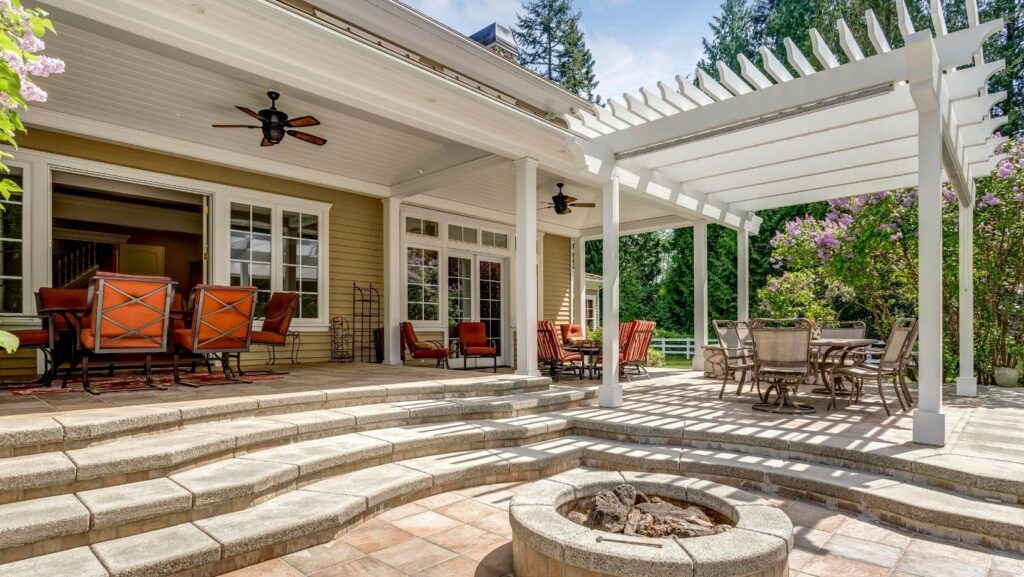
The porch vs deck question sounds easy at first. Then you start thinking about how you actually use the backyard, and it stops being that simple.
A lot of people start with looks. Fair enough. A pretty deck, a shaded pergola, a classic gazebo, a covered porch. All of that sounds good and can absolutely help curb appeal. But once the project becomes real, the practical questions take over. Where does the sun hit in the afternoon? How much shade do you really want? Do you need a roof? How much maintenance are you okay with? And will the space still feel useful once the excitement of the home improvement project wears off? That is where an outdoor space starts to reveal whether it actually fits your lifestyle and helps homeowners explore what they really want before the design starts drifting toward looks alone.
A Porch and a Deck Do Not Feel the Same Once You Start Using an Outdoor Living Space
A porch usually feels more connected to the house in both look and use. It is often covered, sometimes partially enclosed, and usually feels more protected overall. If someone wants more shelter from rain, stronger coverage from the weather, and a space that feels like a softer connection between the indoors and the yard, a porch often comes out ahead. It can also connect more naturally to the back door and create a more sheltered outdoor living space right off the house. In practical terms, porches are almost always covered and tied directly to the house, while decks usually work as more open-air backyard structures.
A deck brings a different feel. It is more open by nature. It may sit low to the ground, push out over the yard, or start higher up and lead down with stairs to the lawn or patio. In some homes, especially when the main floor sits above grade, a deck may even work better off a second story than a porch would. It also makes access to the yard or patio easier when the goal is smoother movement rather than a more enclosed transition.
That is really the main difference. It is not just about construction. It is for daily use. A porch usually gives more shelter. A deck usually gives more openness. A deck usually gives more openness. A porch often costs more too, simply because the roof and its support structure add complexity that a basic deck does not have.
Gazebo vs Pergola Depends on How Much Solid Roof Cover You Actually Want
The gazebo vs pergola choice often gets reduced to style, but that is not really the whole decision.
A gazebo has a proper roof. That means stronger shade, more obvious weather protection, and a more defined space in the yard. It can feel like a room of its own, especially when it has built-in details, railings, or a shape that sets it apart from the rest of the backyard. In some layouts, a gazebo can create a covered area for meals, guests, or a more relaxing corner away from the main deck or patio. Those unique features can make it feel more like a destination in the yard than just another structure.
A pergola feels lighter in the space. More open. It frames an area without covering it fully unless a canopy or another top layer gets added. Near a deck or patio, it often works because it adds structure while still keeping the space bright. It can also frame outdoor furniture, a grill zone, or smaller amenities without making the whole yard feel closed in by roof lines or walls.

The issue is that people often expect both to do the same job, and they simply do not. A gazebo offers more cover. A pergola keeps more openness. Once you factor in weather, sunlight, wind, and how the space will really be used, the decision usually starts making more sense.
Wood Decks and Other Materials Change More Than the Look
This part gets underestimated all the time. People choose a style first and assume the material decision can wait. In practice, the materials shape how the whole project feels and works over time.
Wood decks still make a strong case for themselves. Wood looks natural. It softens the transition from the house into the backyard and works well alongside landscaping, stone, and other outdoor elements. But wood asks for more from the homeowner, too. There is maintenance, weather exposure, cleaning, sealing, and the usual wear that builds up over the years. The same is true when a deck connects to a concrete patio or sits near cement walkways that change how the whole layout feels. In most cases, wood decks require the most maintenance regardless of lumber choice, including routine cleaning, annual inspections, and ongoing upkeep.
Other materials can reduce some of that upkeep, but they also change the feel of the project. Durability matters. Cost matters. So does how much maintenance feels realistic and whether the structure is going to see daily use or only occasional use. Decks can be built from wood or composite materials and finished in a wide range of colors, and higher-performance manufactured options, such as advanced PVC, can offer added protection against mold, moisture, and weathering.
Once a deck, porch, gazebo, or pergola includes stairs, railing, lighting, a covered section, or built-in accessories, the plan gets more complicated fast. Extra features can change the build in a hurry, especially if the structure needs a more level surface, heavier support, or cleaner transitions into the patio or yard.
DIY Sounds Appealing Until the Details Start Piling Up
A lot of homeowners look at DIY first. No surprise there. There is no shortage of online tools, video tutorials, material lists, and step-by-step instructions. At first glance, it can all seem doable. Still, DIY gets harder once the job moves beyond basic measuring and starts involving real site conditions. That is usually the point where a contractor starts noticing problems a homeowner may not catch right away.
But building something safe and durable is not just about ticking boxes. The construction side carries real weight. Framing matters. Joists matter. The way the structure sits on the ground matters. The connection to the house matters. Stair placement matters. Safety matters too, especially when the build includes stairs, railing, or a covered section that has to perform well in real weather. Elevated deck railings usually need to land within a code-driven height range, and joist spacing that works for one material may need to tighten for another, especially with composite decking. If the deck connects back to the house, the ledger board has to be attached properly and flashed correctly so moisture does not lead to rot behind the structure.
For that reason, some homeowners end up talking with a local team for deck building projects once the project moves beyond a simple weekend build.
Deck Building Permits Are Boring, but Skipping Them Can Get Expensive
This is the unglamorous part, but it still matters. It is also where the fun part of planning slows down, because paperwork and site rules start to matter just as much as design ideas.
Before building a permanent deck, porch, gazebo, or pergola, it is smart to check local codes, building permits, and whether the necessary building permits apply. Height, roof coverage, stairs, railing requirements, setbacks, and other features can all be affected by local rules. That also applies to installing covered structures, changing roof lines, or adding details that alter how the project sits near the house or yard. A good contractor will usually account for those requirements early instead of treating them like a problem to fix later. In New Jersey, permits are commonly required for new deck construction, structural replacements, and added stairs or railings. Decks are generally not allowed in front yards, and property-line clearances can shape the size and placement of the project before materials are ever ordered.
The problem is that many people do not think about that until late in the process. By then, changes can get costly. In places with frost and winter movement, footing depth matters too. In New Jersey, deck footings generally need to extend at least 36 inches below grade to reduce frost heave risk. In practice, it is often easier to sort that out early, especially with a deck-building team that also handles resurfacing, than to fix a plan after materials are ordered or work has already started.
A few basic numbers help put those planning decisions into perspective.
Quick deck planning numbers for New Jersey
| Item | Typical number | Why it matters |
| Frost-line footing depth | 2’6″ to 3’0″ | Footings generally need to extend below the local frost line |
| Guard height | 36″ minimum | Affects the elevated deck railing design |
| No-footing exception for some free-standing decks | Up to 200 sq. ft. | Applies only in limited low-height cases |
| Walking surface for that exception | Max 20″ above grade | Helps define when frost footings may be avoided |
| Utility markout timing | 3 business days | Underground lines should be marked before digging |
What Usually Fits Best in an Outdoor Space
Most of the time, there is no one best solution in general. There is only one that fits your house, your routine, and the way you want to use the outdoor space. That is the deck-building question people often miss at the start, because they focus on style before they log how they actually move through the yard.
Some people want a covered porch with more shelter and stronger protection from the weather. Some want an open deck with room for grilling and easier movement into the backyard. Some want the cover and presence of a gazebo. Others prefer the lighter structure and openness of a pergola.
What matters most is whether the structure actually supports the way you live. If it does, the space will feel natural. If it does not, even a beautiful build can feel awkward once it becomes part of daily life.
More Stories
How to Reclaim a Garage That Has Become a Storage Space
Are Millipedes Dangerous or Mostly a Moisture Problem?
What Anaheim Families Should Know About Termite Activity Near Living Spaces