
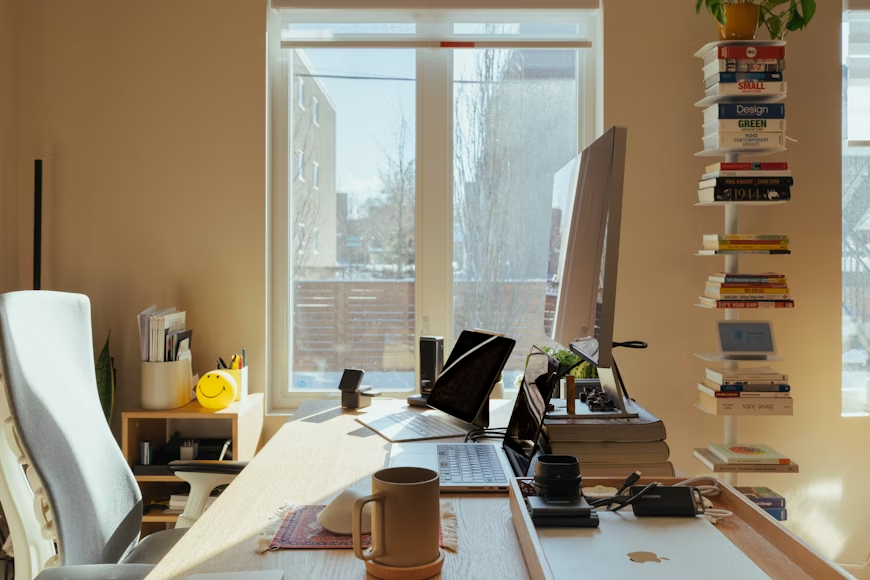
Getting your home office under control starts with understanding one simple truth: your environment decides how well you focus. If your workspace constantly pulls your attention away, even the best intentions fall apart.
When the space works with you instead of against you, deep focus becomes far easier to achieve. In this guide, you’ll learn how to create a distraction-free home office that reduces noise, cuts clutter, and keeps your mind steady. You’ll walk away knowing how to transform any corner into a reliable productivity zone.
Choose a Quiet Zone That Supports Focus
A distraction-free office begins with location. Pick a zone where noise, foot traffic, and visual clutter are naturally low. Even a corner of a bedroom or dining room works if it stays consistent throughout your workweek.
Think about how you move through your tasks. A room that lets you reach essentials easily and avoid constant disruptions helps your brain settle in faster. It also lets you start each day without reconfiguring your setup or adjusting to new surroundings.
Create a Foundation for Comfort
A solid ergonomic layout matters more than people expect. Your body needs comfort to focus fully, so the right adjustments go a long way. Before setting anything else up, look at how your chair, desk, and monitor fit together. There are a few simple cues worth checking.
Here are three quick details to confirm:
- Chair height supports relaxed shoulders
- Monitor sits level with your natural gaze
- The desk allows your arms to rest without strain
These basics help prevent fatigue during longer work blocks.
Use Layered Lighting to Stay Alert
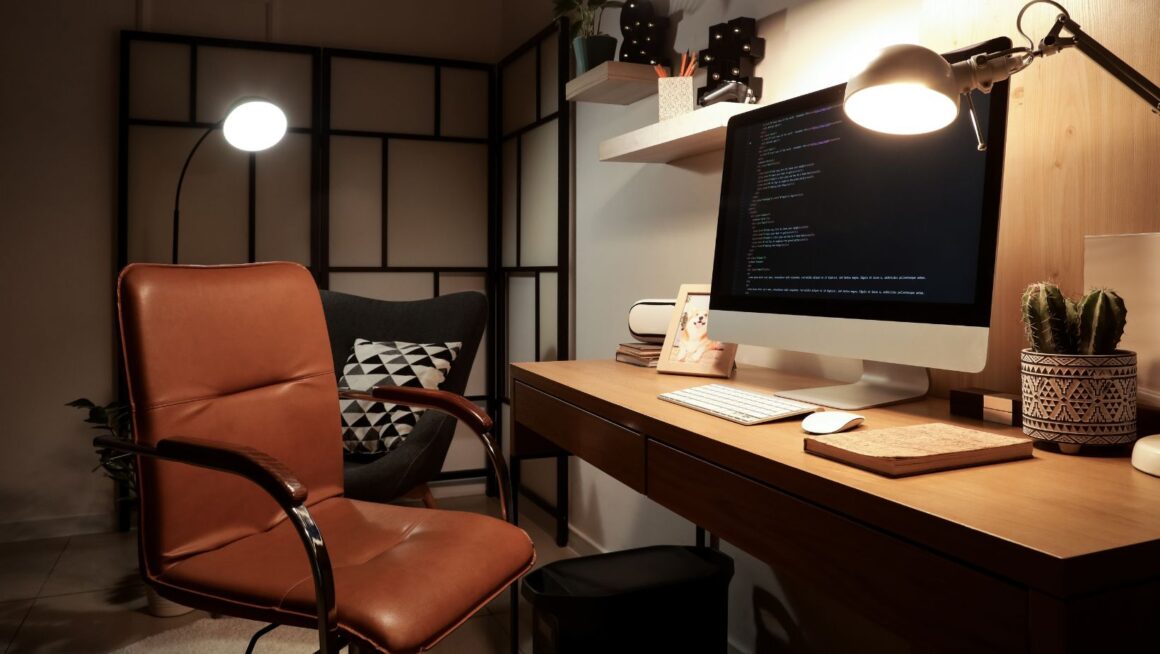
Lighting shapes how energized you feel. A mix of soft ambient light and targeted task lighting helps you stay clear-minded without glare or shadows. This balance keeps your workspace feeling calm but still awake.
Many people also find that positioning a desk near a source of natural light boosts their alertness. Just make sure the light hits from the side so your screen stays readable throughout the day. If you work late, consider adding a warm lamp that feels inviting but not sleepy.
Keep Visual Clutter Under Control
Visual noise interrupts focus almost as quickly as sound. A clean layout makes it easier to lock into work, especially when deadlines pile up. This is why cable control and simple organization tools are valuable.
You can start with a few easy steps. These work surprisingly well for keeping your desk clear:
- Run cables behind your desk
- Store small objects in a single bin
- Keep your daily tools within reach
Once your environment stops pulling your attention away, your workflow feels smoother.
Reduce Noise With Smart Acoustic Choices
A quiet office doesn’t require expensive soundproofing. Soft materials, furniture placement, and a few acoustic touches help dampen the sharp sounds that tend to distract you. Rearranging your room so shelves or curtains line nearby walls absorbs extra noise naturally and makes the entire space feel more controlled.
If you like a little background sound, pick something consistent and low effort. Many people prefer gentle instrumentals or neutral noise simply because it sets a reliable tone for focus sessions and supports longer periods of concentration.
Support Cognitive Clarity With Helpful Resources
A distraction-free office also depends on how well your mind performs during long stretches of work. Hydration, movement, and intentional breaks support steady concentration and help prevent the mental fatigue that builds up throughout the day.
Some readers like learning more about cognitive support ingredients or research that explains how focus can be maintained during demanding tasks. For that, the deep ingredient transparency and study insights offered by Performance Lab can be useful when exploring how to stay mentally sharp and maintain long-term productivity.
Build a Workflow That Reduces Interruptions
Once your space feels supportive, focus on how you structure your day. Grouping similar tasks helps reduce mental clutter because your brain stays in the same mode for longer stretches. For example, batch communication tasks in one block and creative work in another.
Add small, predictable breaks to reset your attention. A short stretch or quick walk keeps your energy steadier than forcing yourself through long, unfocused blocks. Over time, these habits build a rhythm that makes deep work easier to enter. You can also set boundaries with household members or notifications to keep your work cycle intact without constant resets.
Keep Improving Your Distraction-Free Home Office
Creating a distraction-free home office is an ongoing process rather than a one-time project. Every few weeks, take a moment to evaluate what feels cluttered or out of sync with your workflow. Sometimes adjusting a light or clearing a shelf makes a meaningful difference.
If you ever want to explore more ideas or share what works for you, feel free to reach out or join the conversation. Your workspace grows with you, and refining it over time will help you stay focused and productive.
More Stories
How to Choose Wood Flooring in Singapore Without Getting Caught by the Price Tag
A Practical Guide to Planning and Maintaining Your Outdoor Living Room
Designing Spaces for Connection: What Vacation Homes Get Right About Entertaining