
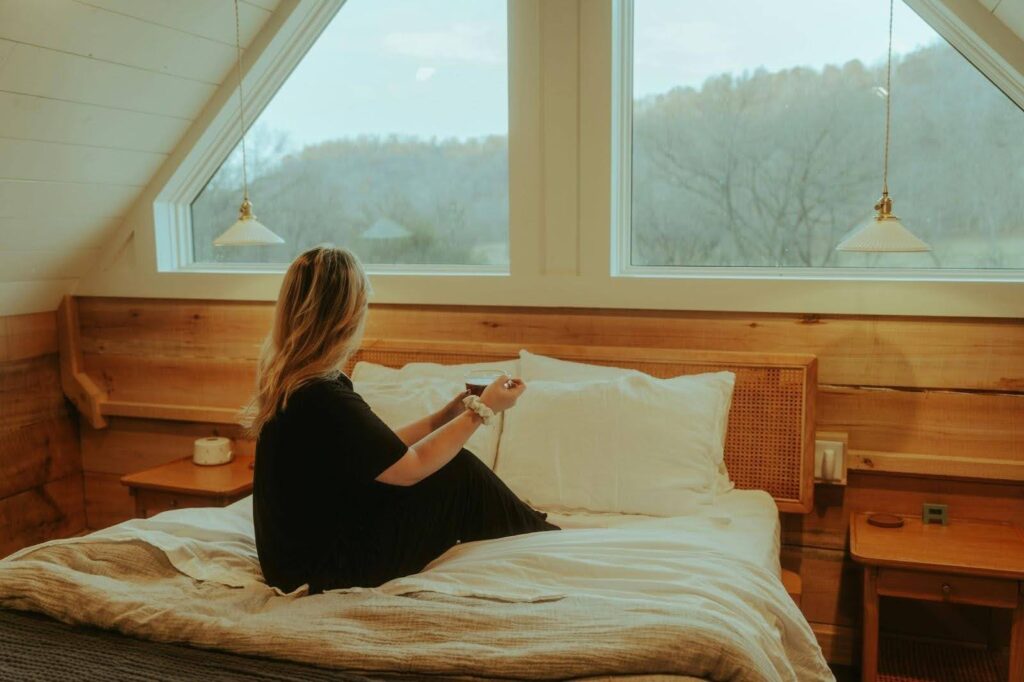
Lying in bed exhausted and still wide awake can feel oddly frustrating. Your body seems to be asking for sleep, but your mind, your schedule, or your nervous system does not follow along. That mismatch is common, and it does not always mean something is seriously wrong.
Sometimes the problem is short term, like stress, late caffeine, screen time, or an irregular routine. Other times, feeling sleepy but unable to sleep can be tied to insomnia, a circadian rhythm issue, poor sleep habits, pain, mood symptoms, or an untreated sleep disorder. The important thing is that there are usually understandable reasons behind it.
Why tiredness and sleepiness are not always the same thing
People often use “tired,” “sleepy,” and “exhausted” as if they mean the same thing. In real life, they can be different.
Sleepiness usually means your brain is ready to drift off. Fatigue is broader. It can feel like low energy, mental fog, heavy limbs, or being worn out without that clean pull toward sleep—even when using therapies like AgelessRx NAD injections to help manage physical tiredness. Some people feel both at once. Others feel drained all day and then strangely alert the minute the lights go out.
That can happen when stress hormones are high, when your sleep schedule is off, or when you have learned to associate bed with frustration instead of rest. Over time, the body can get stuck in a pattern where it feels depleted but not settled.
Common reasons this happens
A few causes show up again and again.
Stress and a revved-up nervous system
This is one of the biggest ones. You may feel physically tired, but your brain is still scanning, replaying conversations, planning tomorrow, or staying on alert. That state makes it harder to shift into sleep.
Anxiety does not always feel like obvious panic. Sometimes it shows up as restlessness, muscle tension, shallow breathing, or the sense that you are tired but cannot “drop.”
Irregular sleep timing
Your internal body clock, called the circadian rhythm, helps tell you when to feel awake and when to feel sleepy. When your bedtime and wake time move around a lot, your body may send mixed signals. Circadian rhythm sleep-wake disorders are a real clinical category, and even milder schedule disruption can make sleep feel off.
This is common in shift workers, frequent travelers, people who stay up late on weekends, and people who nap at unpredictable times.
Screens, light, and stimulation at night
Phones, tablets, TV, work email, online shopping, doomscrolling, even “just one more video” can keep the brain engaged longer than expected. Research on digital technology and sleep quality suggests heavy evening technology use can interfere with sleep, though the exact effect varies from person to person.
Light matters too. Bright light in the evening can delay the body’s usual nighttime cues.
Caffeine, nicotine, alcohol, or other substances
Caffeine can stay in the body for hours. Even an afternoon coffee, energy drink, pre-workout, or some teas may affect people who are sensitive to it. Nicotine is also stimulating.
Alcohol can make a person drowsy at first, but it often disrupts sleep later in the night. That means someone may fall asleep faster and still wake often or sleep lightly.
Pain, headaches, or physical discomfort
It is hard to settle into sleep when the body hurts. Migraine, back pain, joint pain, reflux, hot flashes, congestion, and restless discomfort can all keep someone awake even when they are deeply tired.
Mood symptoms
Depression, anxiety, grief, and burnout can all disrupt sleep in different ways. Some people sleep more. Others feel worn down all day and then cannot fall asleep at night. Sleep and mental health affect each other in both directions, which can make the cycle feel confusing.
A sleep disorder
Sometimes the issue is not just falling asleep. Sleep apnea, a condition where breathing repeatedly narrows or pauses during sleep, can leave people exhausted and unrefreshed. Research continues to show that sleep-disordered breathing affects daytime function, attention, mood, and quality of life. Other disorders, including narcolepsy or circadian rhythm disorders, can also affect how sleepy or alert a person feels at different times.
This does not mean every rough night points to a disorder. It does mean persistent sleep trouble deserves attention.
Signs it may be more than an occasional bad night
A few clues suggest this may be moving beyond a temporary phase:
- trouble falling asleep happens several nights a week
- symptoms last for weeks rather than a few days
- you feel sleepy during the day but still cannot sleep when you try
- your mood, concentration, memory, or work are starting to suffer
- you snore loudly, wake gasping, or your partner notices breathing pauses
- you rely on alcohol, sleep aids, or frequent naps just to get through
Sleep loss can also affect decision-making and attention. That is part of why ongoing sleep problems are worth taking seriously, even when they seem easy to brush off.
What can help tonight
You do not need a perfect routine by bedtime. Small changes can still make the night easier.

Get out of bed if you are fully awake
When you stay in bed frustrated for a long time, the brain can start linking bed with effort instead of sleep. If you have been awake for a while, get up and do something quiet in dim light. Read a few pages. Stretch gently. Listen to something calm. Go back to bed when sleepiness returns.
Keep the environment boring and comfortable
A cool, dark, quiet room tends to help. Try to make the space feel low-stimulation rather than optimized in a complicated way. Sometimes the simplest adjustments are the ones that stick.
Skip the clock-checking
Watching the minutes pass usually adds pressure. Turning the clock away can reduce that mental spiral.
Avoid chasing sleep too hard
Trying to force sleep often backfires. Rest still counts. Lying down with your eyes closed, breathing slowly, and letting the body be still may not feel ideal, but it can reduce the sense of battle.
You are allowed to stop treating the night like a test you have to pass.
Habits that help over time
Sleep tends to improve when the body gets consistent signals.
Keep a steadier wake time
A regular wake time is often more powerful than a strict bedtime. Waking up at roughly the same time every day helps train the body clock.
Reduce late-day stimulants
On the practical side, it helps to notice patterns instead of assuming caffeine is not affecting you. Cutting back after lunch is enough for some people. Others need a longer window.
Build a shorter wind-down routine
This does not need to be elaborate. Ten to thirty minutes of lower light, less screen exposure, and quieter activities can be enough to cue the body that the day is ending.
Use naps carefully
A long or late nap can make nighttime sleep harder. For people who are already struggling to fall asleep, shorter and earlier naps are generally less disruptive.
Track patterns, not just bad nights
To see what’s changing, jot down a few basics for one to two weeks: bedtime, wake time, caffeine, naps, alcohol, screen use, and how long it seemed to take to fall asleep. That record can make patterns easier to spot and can also help if you decide to talk with a clinician.
When to talk with a healthcare professional
It is reasonable to reach out when sleep trouble keeps happening, starts affecting daily life, or comes with symptoms like loud snoring, choking awake, frequent leg discomfort, or major mood changes.
A clinician may ask about your routine, stress level, medications, substance use, and medical history. In some cases, they may recommend an evaluation for insomnia, sleep apnea, or another sleep disorder. That is not overreacting. It is a way to get clearer about what is driving the pattern.
Sleep problems can also overlap with chronic health conditions, pain disorders, and mental health concerns. Good care usually starts with sorting out which pieces are involved rather than assuming there is one simple cause.
A grounded way to think about it
Feeling tired while being unable to fall asleep usually means the body and brain are out of sync, not that you are failing at sleep. Sometimes the mismatch is driven by stress or habits. Sometimes it points to a treatable sleep or health issue. Either way, the goal is not to force sleep harder. It is to understand what may be keeping your system too alert, too uncomfortable, or poorly timed for rest.
When this pattern keeps repeating, steady routines, fewer evening stimulants, and professional support can make a real difference. Improvement is often gradual, but gradual still counts.
Safety Disclaimer
If you or someone you love is in crisis, call 911 or go to the nearest emergency room. You can also call or text 988, or chat via 988lifeline.org to reach the Suicide & Crisis Lifeline. Support is free, confidential, and available 24/7.
Author Bio
Earl Wagner is a health content strategist focused on behavioural systems, clinical communication, and data-informed healthcare education.
Sources
- Pavlova, M. (2017). Circadian Rhythm Sleep-Wake Disorders. Continuum (Minneapolis, Minn.). https://doi.org/10.1212/CON.0000000000000499
- Ellenbogen, J. M. (2016). Sleepiness. Seminars in Neurology. https://doi.org/10.1055/s-0036-1586264
- Wickwire, E. M. (2024). Depression and comorbid obstructive sleep apnea: Association between positive airway pressure adherence, occurrence of self-harm events, healthcare resource utilization, and costs. Journal of Affective Disorders. https://doi.org/10.1016/j.jad.2023.12.055
- Xu, W. (2024). Sleep deprivation alters utilization of negative feedback in risky decision-making. Frontiers in Psychiatry. https://doi.org/10.3389/fpsyt.2024.1307408
- Cabral, L. G. L. (2022). Digital technology and its impacts on sleep quality and academic performance during the pandemic. Arquivos de Neuro-Psiquiatria. https://doi.org/10.1055/s-0042-1755395
- Lewis, S. R. (2018). Melatonin for the promotion of sleep in adults in the intensive care unit. Cochrane Database of Systematic Reviews. https://doi.org/10.1002/14651858.CD012455.pub2
More Stories
Living With Pavatalgia: What To Expect, How It Affects Your Life, And When To Seek Help
Chaitomin Benefits: 7 Science-Backed Ways It Boosts Health, Mood, and Performance (2026 Guide)
Ghostly Advice From The Woowoo Marsupial Trotshaker: Unlikely Wisdom For Weird Times