
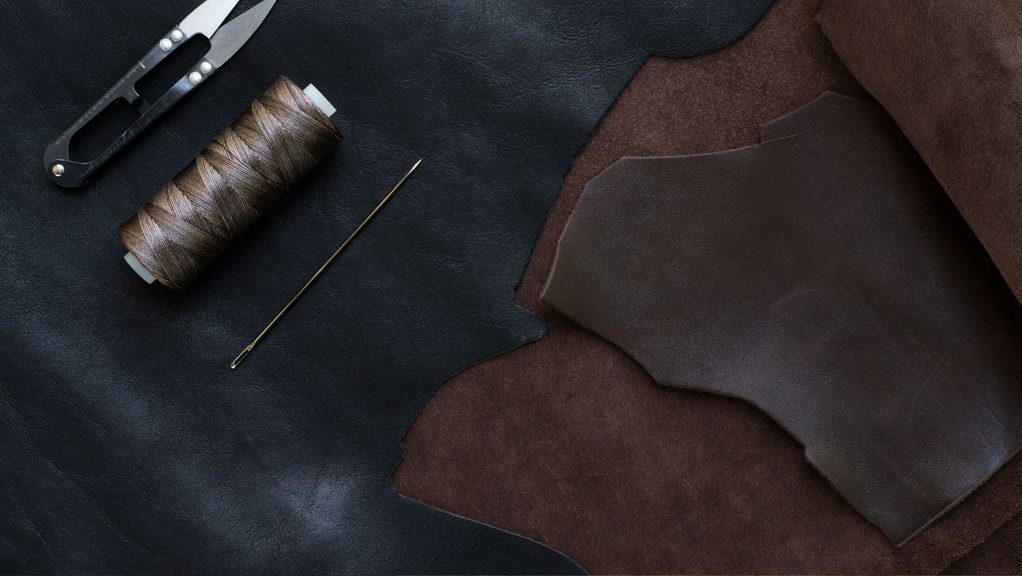
In a carver’s workshop, accessories must withstand constant exposure to dust, shavings, oils, and sharp tools. That is why the choice of material for covers, aprons, and storage systems is of practical importance. Crazy Horse leather combines density, flexibility, and a distinctive appearance that does not fade with active use.
What Is Crazy Horse Leather and Why It Suits a Carver’s Workshop
Crazy Horse Leather is a natural leather that is waxed and specially oiled. In contrast to traditional smooth leather, which has a with a more uniform surface finish, meaning its color can change when pressed, bent, or scratched. This feature creates a characteristic patina, so the material looks more interesting over time.
Wax treatment makes the leather more resistant to dust, minor spills and occasional moisture, and tool marks. For the craftsman, this means that the accessories do not need constant care after each use. Examples of workshop and tool products can be viewed at https://forgedsteeltools.com/.
Crazy Horse leather is well suited for those who appreciate handmade leather goods with a functional design. It does not look “spoiled” after minor traces of use: on the contrary, each mark adds individuality to the product. Such handcrafted leather goods organically fit into the workspace, where things should be reliable, not just decorative.
Crazy Horse Leather Accessories Every Serious Carver Needs in Their Workshop
The most practical accessory for a set of carving knives, gouges, and chisels is a leather tool roll. It helps to separate tools, reduces contact between metal parts, and makes it easier to carry the set. Dense leather holds its shape, so the pockets do not stretch too quickly even with regular use.
A handmade leather tool roll can have pockets of varying widths for knives, chisels, spoon cutters, and sharpening accessories. If your tool set is not standard, a custom leather tool roll lets you add separate compartments for wide handles or longer blades. For a compact set, a leather tool wrap is suitable, which folds up quickly and does not take up much space in a box or bag.
Useful leather accessories for the work area: a roll for cutters and chisels, knife covers, belt holders, a protective apron, and a small organizer for small items.
The Crazy Horse leather apron will help keep clothes clean of sawdust and dust, and it will also hold a pencil, ruler, and knife. Covers and belt accessories become especially relevant when working at a workbench, where it is necessary to quickly secure tools without putting them on the table’s edge.
Why Crazy Horse Leather Outlasts Other Materials in a Carving Workshop
Compared to canvas or synthetic fabrics, dense waxed leather tolerates contact with sawdust, oils, and accidental moisture better. It does not rub against tool handles as easily and does not lose its shape after repeated rolling. A high quality leather tool roll made from this material retains its rigidity while gradually softening and becoming more comfortable to use.
Scratches on synthetic accessories often appear as damage, whereas Crazy Horse leather develops a deeper, more natural tone. Thanks to this, the product does not need to be replaced just because of cosmetic marks. For a workshop where each item works regularly, this is an especially valuable property.
How to Care for Your Crazy Horse Leather Carving Accessories
Caring for such leather is simple. It is necessary to regularly dust off sawdust, wipe the surface with a soft, dry cloth, and keep the accessories away from any strong heat sources. If water touches the leather, it must be allowed to dry under natural conditions without using a hair dryer or placing it on a radiator.
For intensive use, one can use the conditioner for genuine leather. It will preserve the leather’s flexibility and protective coating, but too much of the product makes the leather overly soft. Store rolls, covers, and aprons in a dry place, without pressing them down with heavy objects. This approach will help leather accessories retain their functionality and distinctive patina for many years.
More Stories
How to Organize a Move When Living in a Vancouver High-Rise
The Evolution of Australian Art Through the Decades
When to Call an Emergency Plumber in Melbourne