
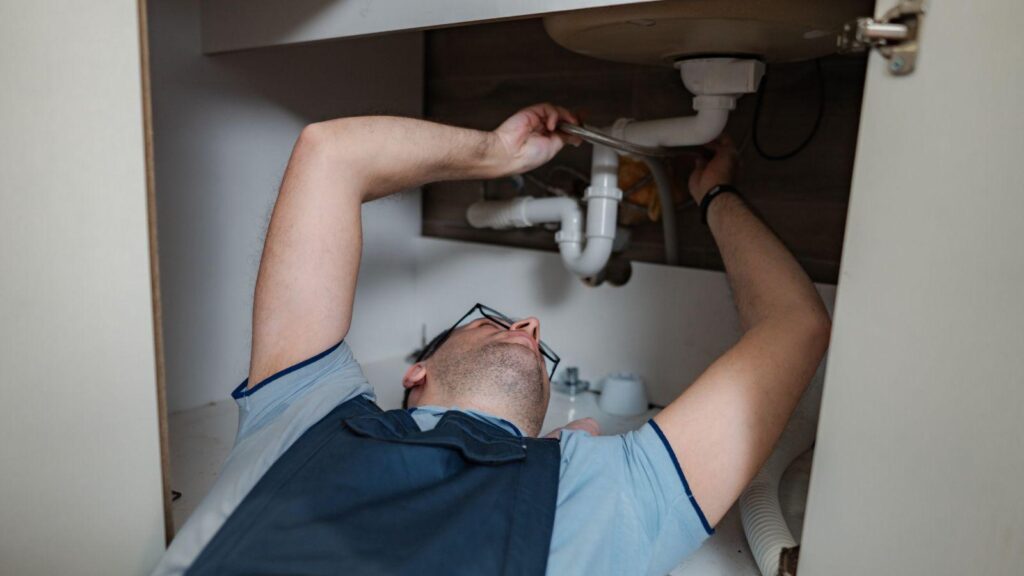
Kitchen remodels are one of the few renovation categories where the plumbing decisions drive almost everything else. Cabinet layout, appliance placement, island design, and even the window locations that everyone argues over at the start of a project all depend on where the water supply, drainage, gas, and waste lines can reasonably run. Get the plumbing scope right early and the rest of the remodel tends to settle into place. Get it wrong, or defer it, and the homeowner usually ends up paying to undo finished work later in the schedule.
This article walks through the plumbing decisions that shape a kitchen remodel, the permit and inspection touchpoints that commonly get missed, and the contractor handover points where problems tend to surface. It is written for homeowners and project managers planning a serious kitchen project, rather than a cosmetic refresh.
Why plumbing comes first
The plumbing layout in a kitchen is constrained by two things. The first is the location of the existing drain stack and the main supply lines. Moving either is expensive and almost always triggers a full permit review. The second is the code requirement that fixture drains maintain a consistent slope to the stack without running further than the code permits. That slope requirement, which is technical but non-negotiable, means the sink position cannot be arbitrary. Islands in particular are often redesigned two or three times before the drainage geometry actually works.
Good kitchen designers draw the plumbing constraint onto the layout before the cabinets are finalised. Weaker designs put the appliances where the client wants them and then discover, during rough-in, that the drain cannot be legally routed. That discovery is a week of delay at best and a structural change at worst.
A useful starting reference for the plumbing scope of a typical kitchen remodel, including the rough-in decisions that drive everything else, is the service overview at https://schoenwalderplumbing.com/kitchen-remodel/, which lays out the sequence contractors actually follow on the job site.
The three rough-in decisions that matter most
Three decisions tend to drive the rest of the plumbing scope on a kitchen project.
The first is the sink position and its relationship to the drain stack. The shorter and straighter the run from the sink drain to the stack, the fewer surprises the rest of the project will encounter. If the homeowner insists on a position that requires a long lateral run, the contractor needs to confirm that the floor structure can accommodate the required slope without compromising the joists.
The second is the treatment of the dishwasher and any secondary sink. Dishwashers need both a dedicated drain connection and an air gap or high loop to prevent backflow. A prep sink adds another drain and another connection point. Both need to be on the plan before the cabinets are ordered, because the cabinet run dictates the available space for the plumbing rough.
The third is the water supply for the refrigerator, any under-counter filtration, and the pot filler if one is specified. These runs are less constrained than the drainage, but they still need to be coordinated with the cabinet and appliance plan, and they still need to be tested for pressure and leaks before the finishes go on.
Permit timing
Permit timing is where otherwise well-planned remodels lose the most calendar weeks. Municipalities vary, but almost all of them require a permit for any plumbing work that involves new fixtures, moved drain runs, or new supply lines. Some additionally require separate permits for gas, which applies to gas ranges and cooktops.
The common failure pattern is to submit the permit application too late. Plan review in a busy municipality can take several weeks, and if the review surfaces any issues, each revision restarts the clock. A project that budgets two weeks for permit review and actually needs six will see its entire schedule slip. Good contractors submit the plumbing and gas permits at the start of the design phase, not at the start of demolition.
The inspection sequence is the other half of the permit story. Most jurisdictions require a rough-in inspection before the walls close, a final inspection after the fixtures are installed, and, depending on scope, a gas pressure test. Each of these has to happen at a specific point in the build, and each has to be scheduled with enough lead time that a late inspector does not stop the job. Contractors who manage this well build the inspection calendar into the master schedule; contractors who manage it poorly discover the inspection requirement on the morning the tile crew was supposed to start.
The contractor handover points
Kitchen remodels almost always involve multiple trades working in a tight sequence. The plumbing contractor typically arrives twice, once for rough-in and once for finish, with the electrical, HVAC, drywall, tile, cabinet, and countertop crews coming through between those two visits. Every one of those handovers is a chance for information to be lost.
The handovers that tend to cost the homeowner are predictable. The rough-in positions for the sink drain and dishwasher have to match the cabinet layout, which means the cabinet shop drawings have to be reconciled against the plumbing plan before the rough is cut. The gas line for the range has to exit the wall in a location that matches the range’s connection point, which is a specification that varies by manufacturer. The pot filler, if one is specified, has to be roughed to the precise height and offset shown on the appliance spec sheet, not an approximation.
When any of these handovers is missed, the fix is almost always visible in the finished work. A sink that is two inches off centre in the countertop cutout. A gas range that does not quite fit against the wall because the shutoff was roughed in the wrong position. A pot filler that reaches the front of the cooktop but not the back. These are small errors individually, but they are the kind of errors a homeowner notices every day for the next twenty years.
The case for a plumbing contractor with remodel experience
Residential plumbing is a broad category. A contractor who handles emergency repairs, pipe replacements, and water-heater installs is not automatically the right fit for a kitchen remodel, because the remodel scope requires a different kind of coordination. A specialist in remodel plumbing understands how to read the cabinet shop drawings, how to work around the tile and countertop crews, and how to sequence the rough and finish visits to match the wider project calendar.
The practical effect, on a well-planned project, is that the plumbing contractor feels like a quiet partner to the general contractor rather than a problem to be scheduled around. The rough-in comes in on time, the inspections pass the first time, and the finish visit takes a day rather than a week of callbacks. On projects where this does not happen, the visible result is a slipped calendar and a frustrated homeowner. The invisible result is often a reworked cabinet run or a relocated fixture that the homeowner never fully loves.
A practical checklist for the homeowner
For homeowners planning a kitchen remodel, a short list of questions tends to surface the real quality of the plumbing scope before the project starts.
First, has the plumbing layout been drawn against the finalised cabinet plan, or is it still provisional? If it is provisional, the project is not ready to start.
Second, have the permits been submitted? If not, when will they be, and what is the expected review timeline in the local municipality?
Third, which trades are coordinating the rough-in handover, and who is responsible for reconciling the cabinet drawings with the plumbing plan?
Fourth, what does the inspection calendar look like, and which inspections are on the critical path?
Fifth, is the plumbing contractor experienced with remodel scope specifically, or is this their first kitchen of the year?
None of these questions are difficult to ask. All of them are questions a credible contractor will welcome. And answering them before the demolition starts is almost always cheaper than fixing the consequences afterwards.
Conclusion
Kitchen remodels succeed or fail on the quality of the plumbing scope more than any other single variable. Layout decisions, permit timing, and the handover points between trades all belong to the plumbing contractor as much as to the general contractor. Homeowners who treat the plumbing plan as a first-order design decision, and who work with a contractor experienced in remodel scope specifically, almost always end up with a better-built kitchen and a calmer project along the way.
More Stories
Fence Condition is a Silent Dealbreaker for Families With Kids or Pets
How to Secure Your Home Office When Working Remotely
Step by step: Why you need a walking vacation and the benefits of exploring cities on foot