

We’ve all been there—that heart-sinking moment when your key snaps off inside a lock. Frustrating, isn’t it? Don’t fret just yet. Getting that pesky fragment out requires finesse rather than force.
We’re about to walk you through a methodical approach that will spare your lock from further complications while rescuing that stubborn key fragment.
Situations like this often highlight the importance of having a few basic tools available at home. Small mechanical problems—whether involving locks, door hardware or other household fixtures—are much easier to handle when you have the right equipment nearby. Even simple repairs can become manageable when approached calmly with suitable tools and a bit of patience.
Assess the Situation
Before diving into extraction techniques, take a moment to properly evaluate what you’re dealing with. This preliminary step might save you considerable hassle down the road.
What Can You Actually See
Have a good squint at that keyhole. Is a substantial portion of the key visible, tantalisingly close to your fingertips? Or has the fragment retreated deep within the lock’s mysterious innards?
The visibility factor dramatically influences your extraction strategy. When more of the key peeks out, you’re in luck. The removal process becomes infinitely more straightforward.
Keep Your Cool
It’s easy to spiral into panic mode when you’re locked out or facing a broken key dilemma. Yet, hasty decisions rarely yield favourable outcomes in these scenarios.
Take a deep breath. Release that tension from your shoulders. A composed approach leads to clearer thinking, which in turn produces more effective solutions.
Tool Talk
Your visual assessment should inform your tool selection. For those visible key fragments, a trusty pair of needle-nose pliers might just be your knight in shining armour.
When dealing with barely visible fragments, specialised key extractors enter the conversation. Making this determination now saves precious time later.
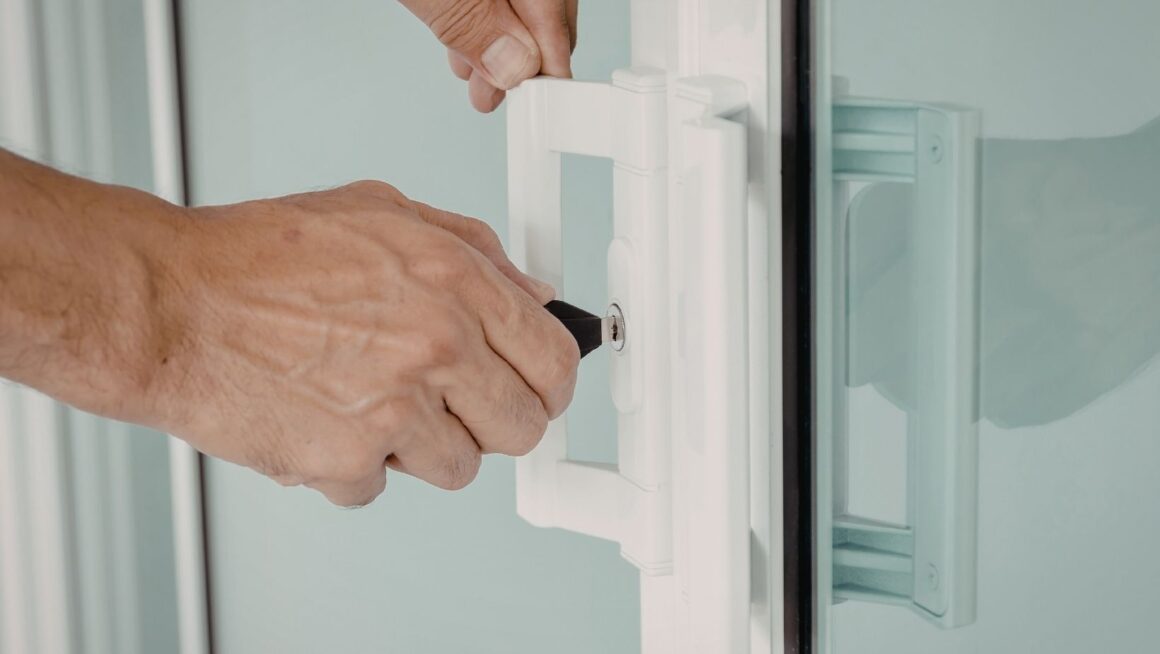
Many homeowners keep a small collection of tools for situations like this. Precision hand tools are especially useful when dealing with delicate mechanisms such as locks, hinges and other small fittings. While power tools are not typically used to remove a broken key itself, they may be helpful when adjusting nearby door hardware or removing surrounding fittings if additional access to the lock mechanism becomes necessary.
Gathering Your Key-Saving Arsenal
Successfully taking out a broken key from your door lock requires the right equipment. Here’s what might prove indispensable in your rescue mission:
- Needle-nose pliers. These slender-tipped tools excel at grasping fragments in tight spaces. They’re particularly valuable when a generous portion of the key remains accessible.
- Key extractor tool. Specifically engineered for this predicament, extractors feature tiny hooks designed to catch on key serrations and facilitate removal. They’re worth their weight in gold when dealing with deeply embedded fragments.
- Quality lubricant. A dash of graphite powder or lock lubricant can transform a stubborn extraction into a smooth operation by minimising friction between metal surfaces.
Take stock of your home toolbox before rushing to the hardware store—you might already possess these items. When learning how to get a broken key out of a lock, using the right tools simplifies the extraction process and protects your lock from potential damage.
Keeping a well-organised toolbox at home can make these types of mechanical challenges much easier to address. Many everyday household issues—from loose door handles to misaligned hinges—can often be solved quickly with the proper tools on hand. Having access to reliable equipment allows homeowners to deal with minor problems before they turn into larger repairs.
The Lubricant Advantage
Getting your lock working smoothly again is much easier with the right approach. A touch of lubricant can work wonders when you’re dealing with stuck key pieces.
Slick substances create a pathway for those pesky fragments to glide out without much resistance. The occasional stubborn bit stands little chance in this slippery environment.
Your lock’s inner workings will thank you, too. Quality lubricants shield delicate mechanisms from unnecessary strain, helping everything last substantially longer.
Just remember, a little goes a long way. Drowning your lock might invite unwanted grime to collect over time. A modest application, precisely delivered, yields remarkable outcomes.
Consider this your first move before trying anything else. A well-prepared lock often responds beautifully to gentle extraction attempts afterwards. This preliminary step transforms what follows into something far more manageable.
More Stories
How to Reclaim a Garage That Has Become a Storage Space
Are Millipedes Dangerous or Mostly a Moisture Problem?
What Anaheim Families Should Know About Termite Activity Near Living Spaces