
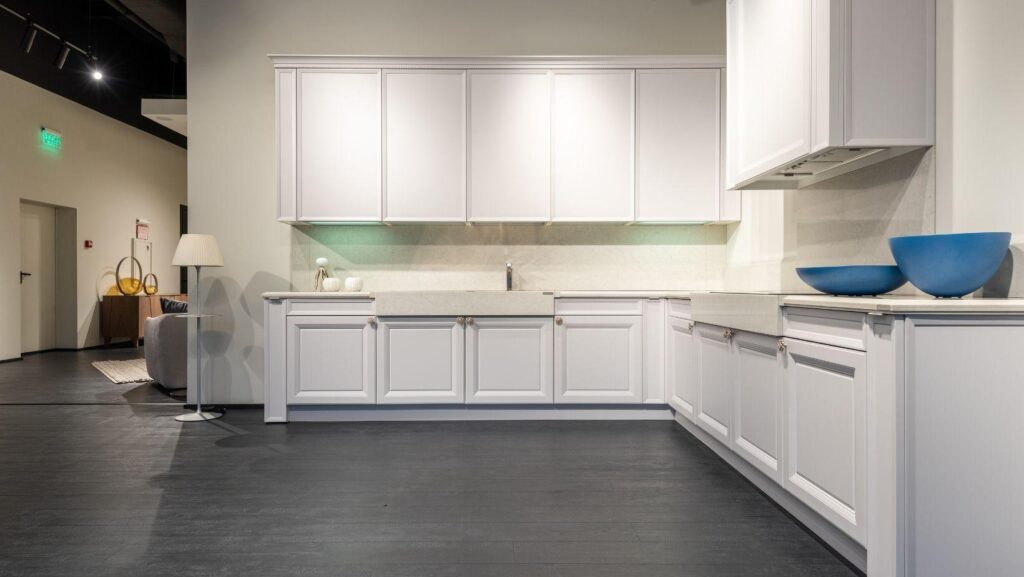
Cabinet refacing is one of the most cost-efficient ways to transform a kitchen without the disruption, timeline, and expense of a full renovation. For homeowners in the Arlington Heights area, Cabinet Refacing Arlington Heights provides exactly this kind of transformation — new doors, new hardware, and new veneer over existing boxes — without removing cabinets, rerouting plumbing, or replacing appliances. When it is done without adequate preparation, however, it produces a result that the homeowner did not expect, often because the style selected in a showroom or catalog was not actually compatible with what the existing frames and layout would support.
The choice between inset and overlay cabinet doors is the decision that most commonly produces that gap — a style decision that appears aesthetic but that has structural, cost, and feasibility dimensions that the showroom visit does not surface. This piece covers what cabinet refacing actually changes, how the two door styles differ in both appearance and project reality, and what to know before signing an agreement with a cabinet contractor.
What Cabinet Refacing Actually Changes and What It Leaves Behind
Cabinet refacing replaces the visible surfaces of an existing cabinet installation while leaving the underlying box structure in place. In practice, this means new doors and drawer fronts, new hardware, and a new veneer or laminate applied to the exposed face frames and box sides that are visible when the doors are open. It does not mean new cabinet boxes, new interior organization, or any structural changes to where the cabinets are positioned.
What stays behind is the existing box — the plywood or particleboard structure that forms the walls, floor, ceiling, and dividers of each cabinet unit. That existing box determines the dimensions that the new doors must fit, the condition of the face frame that the refacing material bonds to, and in the case of inset doors specifically, whether the frame's construction is compatible with the inset style at all. A refacing project is fundamentally constrained by what the existing structure will allow, and the style choices that are possible depend on the specific condition and construction of those existing boxes.
The permanence of the refacing is a consideration that some homeowners underestimate. New veneer applied to existing face frames is a bonded installation; removing it to do something different later is not a simple reverse. A homeowner who is uncertain about their long-term plans for the kitchen — whether they are likely to renovate or sell the home within a few years — should weigh the refacing investment against the timeline during which they will benefit from it.
How Inset and Overlay Door Styles Affect the Final Cost of a Cabinet Project
The difference between inset and overlay doors is a question of how the door relates to the cabinet frame when it is closed.
Overlay doors are mounted in front of the face frame — they overlap the frame opening rather than sitting within it. Full overlay doors cover most of the face frame, leaving minimal frame visible between adjacent doors. Partial overlay doors leave more of the face frame exposed. Overlay doors are the more forgiving option for refacing projects because the door simply mounts to the face of the frame; the precision requirements are lower than for inset, and minor variations in frame condition have less visible impact.
Inset doors are hung within the face frame opening, flush with the face frame surface when closed. The inset style requires the frame to be square, level, and consistent in its dimensions across the entire installation, because the door fits within the frame opening with minimal clearance on each side. Any variation in the frame — a box that has racked slightly, a frame that is not perfectly square, corners that are not true — produces visible gaps or binding in an inset door that would not be apparent with an overlay door covering the same frame imperfection.
The cost difference between the two styles reflects both the door cost and the labor cost. Inset doors are more expensive to manufacture because the fit tolerances are tighter and the hinge mechanism is different. The labor cost for installing inset doors — including the fitting and adjustment required to achieve the consistent reveal around each door — is higher than for overlay. On a refacing project where the existing frames have any variation from square and level, the additional labor to bring the frames to inset-compatible condition adds further to the cost differential.
For a refacing project on existing cabinets that were not originally built to inset standards — which is the majority of kitchen cabinet installations from the last thirty to forty years — the cost premium for inset can be significant, and the visual result depends heavily on the condition of the existing frames. An overlay door on the same frames will cover more of the variation that was already there.
For homeowners in Arlington Heights comparing inset vs overlay cabinets ideas for a refacing project, understanding which style is actually achievable with the existing frame condition is the first question — the aesthetic comparison comes second.
What to Ask a Cabinet Contractor Before Committing to a Style or Refacing Package
The questions that reveal the most about a cabinet contractor's competence and transparency are the ones about the specific constraints of your existing installation, not the ones about the products they offer.
Ask whether the contractor will inspect the existing cabinet boxes before recommending a style or quoting a price. A refacing quote that is provided without inspection of the existing frames is a quote that assumes conditions that may not be accurate. Box condition, frame squareness, door opening dimensions, and the presence of any prior modifications to the existing installation all affect what is feasible and what the project will actually cost. A contractor who quotes without inspection is setting expectations that the installation may not meet.
Ask specifically whether your existing frames are compatible with inset doors if that is your style preference. The contractor should be able to tell you, after inspection, whether the frames are square and consistent enough to support the inset style without significant remediation, or whether the investment in remediation would be justified given the condition of the existing boxes. A contractor who says yes to inset without inspecting is not providing reliable information.
Ask what the refacing package includes and, specifically, what it excludes. Interior box surfaces that are visible when doors are open — shelves, interior side panels — may or may not be included in the refacing scope. Hardware removal and disposal, hinge adjustment after installation, and the treatment of any areas where the existing veneer must be matched or transitioned are all scope questions that produce surprises when they are not addressed in the agreement.
Ask about the material used for the face frame veneer and its compatibility with the door material. The veneer applied to face frames and box sides must be consistent in appearance with the door material — the same species, finish, and texture — so that the overall installation presents a uniform look. A contractor who sources doors and veneer from different suppliers without confirming compatibility may produce an installation where the color match is close but not exact, which is visible in certain lighting conditions.
How Kitchen Layout and Frame Condition Determine Which Cabinet Door Style Is Actually Possible
The kitchen layout introduces specific constraints on cabinet style selection that the showroom visit does not reveal.
Upper cabinets adjacent to ceilings with limited clearance present a fitting challenge for any door that requires adjustment room above the door opening. Inset doors that require the frame to be perfectly square may produce binding against the ceiling if the existing installation has settled or shifted slightly since installation. Overlay doors, which attach to the face of the frame rather than fitting within the frame opening, accommodate more variation in the relationship between the frame and the ceiling.
Corner cabinet configurations — lazy Susan units, blind corners, or full-depth corner cabinets — have door arrangements that vary significantly in how they interact with adjacent cabinet runs. An inset door on a corner cabinet must account for the relationship between the door and the adjacent door or wall panel, which requires specific attention to the corner configuration. A contractor who does not measure and account for corner configuration in the quote may discover at installation that the selected style requires modification.
Face frame condition is the most fundamental constraint. A face frame that has been painted over multiple times may have a different profile than the original — paint buildup on the frame changes the depth relationship between the frame surface and the door opening, which affects inset door fit. A frame that has moisture damage, that has been repaired previously with filler or patching, or that has sections that are not in the same plane as adjacent sections requires assessment before any refacing commitment is made.
For homeowners in the Arlington Heights area who are considering cabinet refacing and want an accurate assessment of what their existing installation will support, Kitchen Cabinet Guys includes an in-home consultation that evaluates the existing frame condition and provides a style recommendation based on what the specific installation will actually achieve.
For homeowners across the Chicago suburbs searching for kitchen cabinet refacing near me, companies provide a straightforward assessment of what your existing cabinets can support before any style decision is made — so the result matches the expectation rather than diverging from it after the project has started.
More Stories
What Are European Windows? A Complete Guide to European-Style Windows
CoolIdeas-TheHomeTrotters: 7 Weekend Home Refreshes That Actually Transform Your Space (2026)
Gemstone Guides From Homeq Trotminer Sideboard: Practical Tips For Identification, Care, And Use