
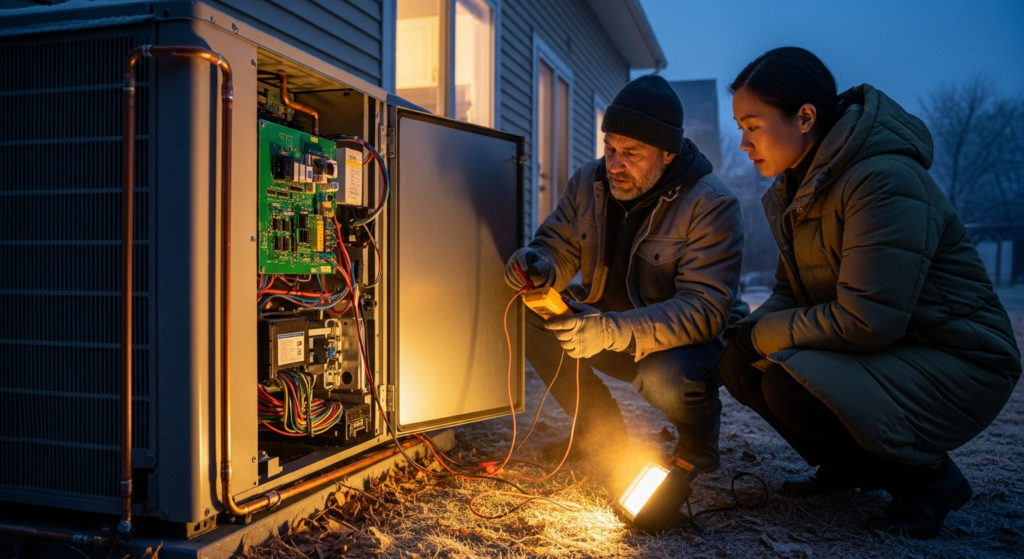
Waking up to a freezing house and seeing the exterior heat pump encased in a solid block of ice is a stressful winter scenario. The panic sets in immediately as indoor temperatures plummet and the heating system audibly strains against the weather. This frustrating situation is becoming increasingly common, as the share of Canadian households relying on heat pumps as their primary heating source grew to 9% by the end of 2023. While these modern systems are resilient, severe deep freezes occasionally trigger communication delays within the automated defrost cycle. Troubleshooting the outdoor sensors and resetting the main control board can safely resolve these electrical errors and quickly restore warmth to your home.
Diagnosing the Freeze: Normal Operation vs. Defrost Cycle Delays
It is normal for modern heat pumps to develop a light, visible layer of frost during standard winter operation. The unit runs longer to maintain indoor comfort, efficiently pulling available thermal energy from the frigid outside air. According to recent performance research from the U.S. Department of Energy and Oak Ridge National Laboratory, modern heat pumps retain 65% to 88% of their heating capacity even at 17 degrees Fahrenheit. The built-in defrost cycle typically handles this light frost by briefly melting the ice before automatically resuming regular heating mode. Homeowners should not panic at the sight of a thin white coating on the exterior condenser coils.
A serious mechanical issue arises when unexpected cold snaps push these systems to operate continuously without a natural break. This relentless demand often leads to restricted airflow and thermostat communication errors that prevent the necessary defrost cycle from triggering. Without the defrost cycle activating, persistent ice buildup severely restricts the fan and forces the system to rely on its expensive emergency heat. Understanding the physical differences between a normal frost layer and a delayed defrost cycle prevents unnecessary emergency repair bills. You can easily spot the distinct warning signs by checking the thickness of the exterior ice and testing the temperature of the air blowing indoors.
| Symptom | Normal Operation | Defrost Failure Indicator |
| Ice Thickness | Light, manageable frost | Solid, thick block of ice |
| Airflow | Warm air blowing indoors | Lukewarm or cold air indoors |
| Cycle Duration | Occasional 10-15 min defrost breaks | Running constantly with no thawing |
What You’ll Need for This Fix
Before touching any exterior hardware, gather the proper diagnostic tools to ensure the repair process remains safe and effective. You must treat this equipment with respect, as peak winter demand for heat pump performance means systems are operating under maximum electrical load. Safety is always paramount, so double-check your tools before heading out into the snow to perform any physical inspections. Having everything prepared reduces the time you spend exposed to freezing temperatures while troubleshooting the heavy machinery. Keep your gear organized and accessible so you can efficiently diagnose the control board and exterior temperature sensors.
Safety Warning: Working with 240V electrical systems is extremely dangerous. Always turn off the power at the main breaker before inspecting hardware. If you are uncomfortable with these steps, hire a qualified professional.
- A digital multimeter (for testing sensor resistance).
- A standard Phillips-head screwdriver (for removing the access panel).
- Heavy-duty winter gloves.
- A soft-bristle brush (for safely clearing loose debris; never use sharp objects on coils).
Step-by-Step Instructions to Reset and Fix the Defrost Cycle
Step 1. Safely Test the Outdoor Temperature Sensors
The defrost thermostat, a small sensor attached directly to the outdoor coil, tells the control board when the metal is freezing. If this delicate sensor becomes coated in heavy debris or experiences a mechanical failure, it cannot send the signal needed to initiate thawing. Turn off the electrical power at the main breaker, locate the sensor, and visually inspect it before using your digital multimeter to check for electrical continuity. Dealing with these outdoor components requires patience, especially since heat pumps extract heat from outdoor air and bring it indoors, even in frigid temperatures. A faulty sensor leaves the system completely blind to the ice accumulation, rendering the entire automated thawing process useless.
Step 2. Reset the Main Electronic Control Board
Severe winter weather frequently causes temporary software glitches or communication issues between your indoor thermostat and the outdoor condensing unit. When a heating system runs non-stop, prolonged run times and restricted airflow can overload the board and stall the necessary defrost commands. Performing a fast, hard electrical reset often clears these operational roadblocks immediately without requiring replacement parts. Turn off the breaker to both the indoor air handler and the outdoor unit, wait five minutes to clear the capacitor memory, and then restore the power. This sequence forces a complete software reboot, giving the operating system a fresh opportunity to recognize the heavily frozen coils.
Step 3. Verify Proper Refrigerant Flow
The reversing valve is the crucial internal component that temporarily switches the unit into air conditioning mode, pumping hot refrigerant outdoors to melt the ice. You need to listen closely for a distinct “whoosh” sound when the unit attempts to enter defrost mode, indicating the internal valve is shifting properly. A failed valve traps the generated heat inside your house while the outdoor coils continue to freeze solid under the winter weather. Heating systems designed for energy efficiency interact differently with exterior temperatures, relying heavily on this continuous, pressurized refrigerant loop to balance extreme conditions. If the valve remains physically stuck, the system will never generate the concentrated outdoor heat required to successfully shed the thick ice layer.
When DIY Isn’t Enough: Upgrading Your System in 2026
There are unavoidable situations when simple troubleshooting cannot fix permanent hardware failures, such as a burnt-out reversing valve or a severe refrigerant leak. Continuing to run a severely damaged heating unit drives up electricity costs and can permanently destroy the internal compressor. If your equipment constantly freezes over despite clean sensors and hard resets, it is time for a professional assessment or a high-efficiency replacement.
Trusting local experts like LG Home Comfort for your Ottawa heat pump installation ensures you receive a swift diagnosis, proper sizing, and flawless equipment integration. The Canada heat pump market was valued at approximately USD 4.2 billion in 2024, reflecting how many homeowners are confidently turning to certified professionals for reliable winter upgrades.
Upgrading to a newer HVAC model is also a strategic financial decision for modern homeowners looking to permanently reduce their monthly utilities. Modern heat pumps deliver two to three units of heating energy for every unit of electricity consumed, achieving 200% to 300% efficiency. This performance rating slashes operational costs, quickly offsetting the initial price of professional installation and long-term maintenance. Furthermore, these advanced systems are up to twice more efficient than a traditional natural gas furnace. LG Home Comfort provides complete 360° support from the initial inspection to the final switch, guaranteeing that your energy-efficient replacement keeps you perfectly warm through the harshest winter nights.
Restoring Your Home’s Winter Warmth
Finding a frozen heat pump is a stressful event, but understanding the difference between normal frost and a delayed defrost cycle saves significant time and money. Simple sensor continuity checks and electrical hard resets solve the vast majority of software errors and communication glitches. Keeping your exterior unit clear of heavy snow drifts ensures the mechanical equipment operates exactly as the manufacturer intended. With government grants offering up to $10,000 for eligible households to switch to efficient heating, maintaining or upgrading your primary system has never been more financially advantageous. Have you ever had to brave the cold to troubleshoot your heat pump? Share your winter home maintenance tips in the comments below!
More Stories
Step by step: Why you need a walking vacation and the benefits of exploring cities on foot
Summer 2026: Prepare Your Backyard with Cool Patio Cover Ideas
Popular Signs Your Omaha Home Needs Roof Repair After a Nebraska Storm