
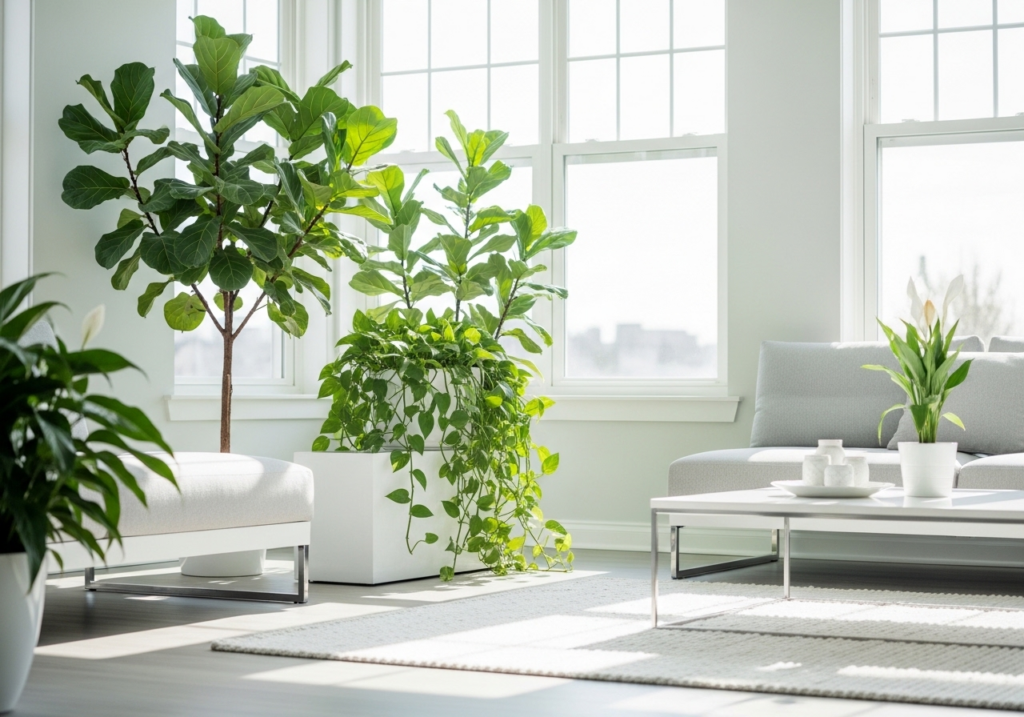
There’s something deeply satisfying about stepping into a home filled with thriving greenery—the way sunlight filters through leaves, the fresh scent of earth and growing things, the sense of calm that washes over you. As more homeowners discover the profound impact of bringing nature indoors, biophilic home designs have emerged as both a design trend and a wellness movement.
This isn’t just about following the latest decorating fad. When done right, biophilic design creates spaces that feel alive, breathe better, and genuinely improve how we feel day to day.
Why Biophilic Design Matters for Modern Homes
By thoughtfully incorporating large indoor plants and other natural elements, you can create dramatic focal points that transform any room while reaping genuine benefits for your health and happiness.
Biophilic design goes far beyond scattered houseplants on windowsills. It’s the intentional practice of weaving natural elements throughout our indoor spaces, creating environments that echo the patterns, textures, and rhythms we’re naturally drawn to outdoors.
The science backing this approach is compelling. Researchers at the University of Exeter have documented how exposure to natural elements can lift our mood, sharpen focus, and even boost productivity. For those of us living in urban apartments or homes with limited outdoor access, these findings are particularly meaningful.
The numbers tell a striking story: studies reveal that incorporating natural elements can reduce anxiety by up to 60% while also lowering blood pressure and enhancing cognitive function. What starts as an aesthetic choice becomes a powerful tool for daily wellness—transforming your home into a space that actively supports your mental and physical health.
Essential Elements of Biophilic Indoor Spaces
Building an effective biophilic environment isn’t about cramming every corner with plants. Instead, it requires a thoughtful balance of several key elements working in harmony.
Natural light optimization serves as your foundation. Plants need it to thrive, and your body’s natural rhythms depend on it. Work with what you have—position mirrors strategically to bounce light into darker corners, and choose reflective surfaces that amplify the brightness you already receive.
Texture plays a crucial role in creating that authentic connection to nature. Think beyond the visual: incorporate materials that invite touch and engage your senses. Reclaimed wood surfaces, natural stone accents, soft linen textiles, and handwoven baskets all contribute to a space that feels genuinely organic rather than artificially decorated.
Don’t overlook the subtle power of water. A small tabletop fountain or even groupings of plants that naturally increase humidity can introduce those gentle sounds and moisture levels that make indoor spaces feel more alive. Sometimes the most effective changes are the ones you feel rather than see.
Selecting and Arranging Greenery for Maximum Impact
The secret to successful indoor gardening lies in working with your space rather than against it. Start by honestly assessing your light conditions, humidity levels, and how much maintenance you realistically want to take on.
Low-maintenance species with proven track records make the best foundation for your indoor garden. Snake plants, pothos, and rubber trees have earned their popularity—they adapt well to typical home conditions while actively cleaning your air and requiring minimal fuss.
When it comes to arrangement, think in layers. A commanding floor plant like a fiddle leaf fig can anchor a corner, while trailing pothos cascading from a shelf adds movement and softness. Smaller succulents and medium-sized plants fill in the gaps, creating a composition that feels both intentional and naturally evolved.
For homes with limited floor space, vertical elements become your best friends. Wall-mounted planters, hanging gardens, and tall, narrow plants can dramatically increase your greenery without sacrificing precious square footage.
Maintenance Strategies for Thriving Indoor Greenery
Indoor plants face unique challenges that their outdoor cousins never encounter. Consistent air temperatures, limited air circulation, and artificial lighting all require adjustments to your care routine.
Watering becomes an art of observation rather than schedule-following. Most indoor plant casualties result from overwatering, not neglect. Learn to read your plants—stick your finger into the soil, watch for subtle changes in leaf color or texture, and adjust accordingly. Most plants prefer to dry out slightly between waterings.
Humidity often becomes the invisible factor that makes or breaks your indoor garden, especially during winter months when heating systems create desert-like conditions. Grouping plants together naturally increases local humidity, while simple humidity trays can provide extra moisture for more finicky species that prefer the 40-60% range.
Stay alert to your plants’ signals. Yellowing leaves typically point to overwatering, while stretching, leggy growth suggests your plant is reaching for more light. Regular observation and willingness to relocate plants as needed will keep your indoor garden thriving year-round.
Complementary Design Touches to Elevate the Oasis
The containers and accessories you choose can either enhance your biophilic design or undermine it entirely. Earthy pottery, natural fiber plant hangers, and furniture with organic lines all support the natural aesthetic you’re building.
Consider how biophilic principles can extend beyond your main living areas. Bedrooms benefit enormously from air-purifying plants like aloe vera, which release oxygen at night. Kitchen windowsills can host herb gardens that serve double duty as both decoration and dinner ingredients.
The key is maintaining consistency in your approach while allowing each room to express its own personality within the larger natural theme.
Bringing It All Together: Your Path to a Greener Home
Creating your personal indoor oasis doesn’t require a complete home makeover or a degree in horticulture. The most successful transformations happen gradually, with each addition building on what came before.
Start with a single room and one significant change—perhaps that statement plant you’ve been considering, or simply rearranging your space to make better use of natural light. Pay attention to how these changes affect your daily experience. Do you find yourself lingering longer in that space? Feeling more relaxed when you’re there?
Your indoor oasis offers more than visual appeal—it provides a daily dose of nature’s restorative power, cleaner air to breathe, and a tangible connection to the natural world. In our increasingly digital lives, these benefits become not just nice to have, but essential for maintaining balance and well-being.
The path to a greener, more harmonious home begins with that first intentional step. Your future self will thank you for taking it.
More Stories
How to Choose the Right Gaming Table for Board Games and Tabletop Play