
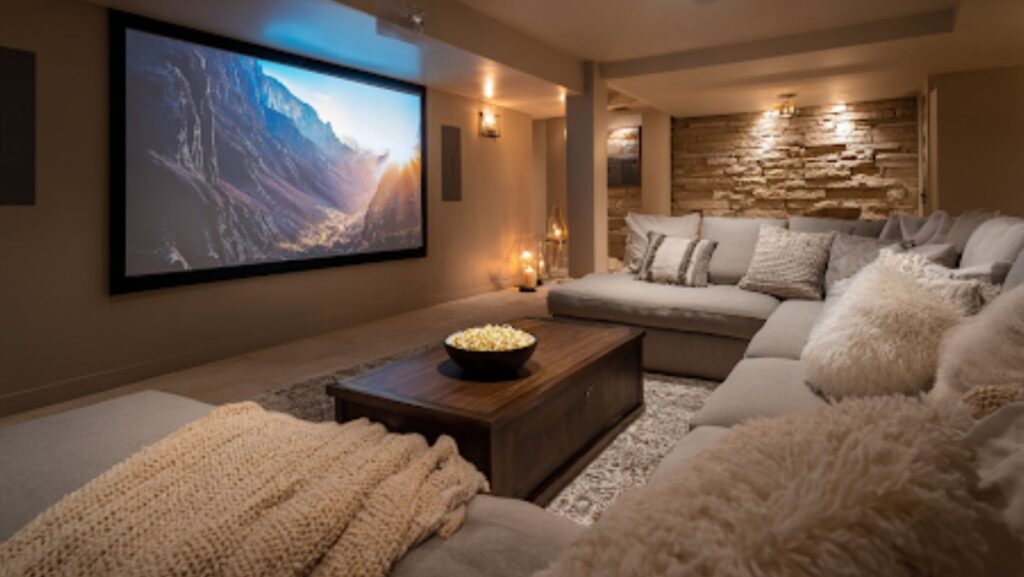
The dream of a home theater feels expensive. Massive screens. Professional surround sound systems. Leather recliners that cost more than your first car. Hollywood-style setups fill Pinterest boards and YouTube videos, making the whole idea seem out of reach for regular homeowners. But here’s the truth. You don’t need a massive budget to create an amazing movie-watching experience at home. The real magic happens when you focus on what actually matters.
The secret lies in setting the right priorities. You don’t need to spend thousands. Smart choices like budget-friendly projectors, second-hand speakers, and acoustic panels for better sound can transform any room into a cinema experience. Knowing where to invest and where to save makes all the difference. Most people overspend on flashy equipment while ignoring basics that actually improve the experience.
This guide walks you through building a home theater step by step without emptying your savings account. We’ll cover room selection, screen options, audio setup, acoustics, seating, and those finishing touches that make everything feel cinematic. Let’s turn that spare room into something special.
Choosing the Right Room for Your Home Theater
Not every room works equally well. Your choice affects everything from screen size to sound quality. Take time to evaluate your options before buying any equipment.
Basements make excellent theaters. They’re naturally dark, often isolated from household noise, and typically have fewer windows to worry about. The rectangular shape common in basements also helps with speaker placement and sound distribution. If you have an unfinished basement, even better. You can build exactly what you want from scratch.
Living rooms work too, but they come with compromises. Natural light fights against screen visibility during daytime viewing. Family traffic interrupts movie nights. Sound travels to other rooms and bothers people trying to sleep. Still, many families make it work beautifully with the right curtains and scheduling.
Spare bedrooms offer a middle ground. They’re usually dark enough, reasonably quiet, and already finished. Size limits your screen options, but a 100-inch projection is still possible in most bedrooms. Consider how often you’ll actually use the space. A dedicated theater room that sits empty wastes money.
Look for rectangular spaces rather than square ones. Sound behaves better in rooms where the length differs from the width. Avoid rooms with lots of hard surfaces like tile floors and large windows. These create echo problems that even expensive speakers can’t overcome.
Screen Options
This decision shapes your entire setup. Both options have passionate supporters. The right choice depends on your room, budget, and priorities.
Televisions offer convenience and picture quality. Modern 4K TVs deliver stunning images right out of the box. No calibration headaches. No bulb replacements. No worrying about ambient light ruining the picture. Prices have dropped dramatically. A 65-inch quality TV costs under $500 now. That seemed impossible just five years ago.
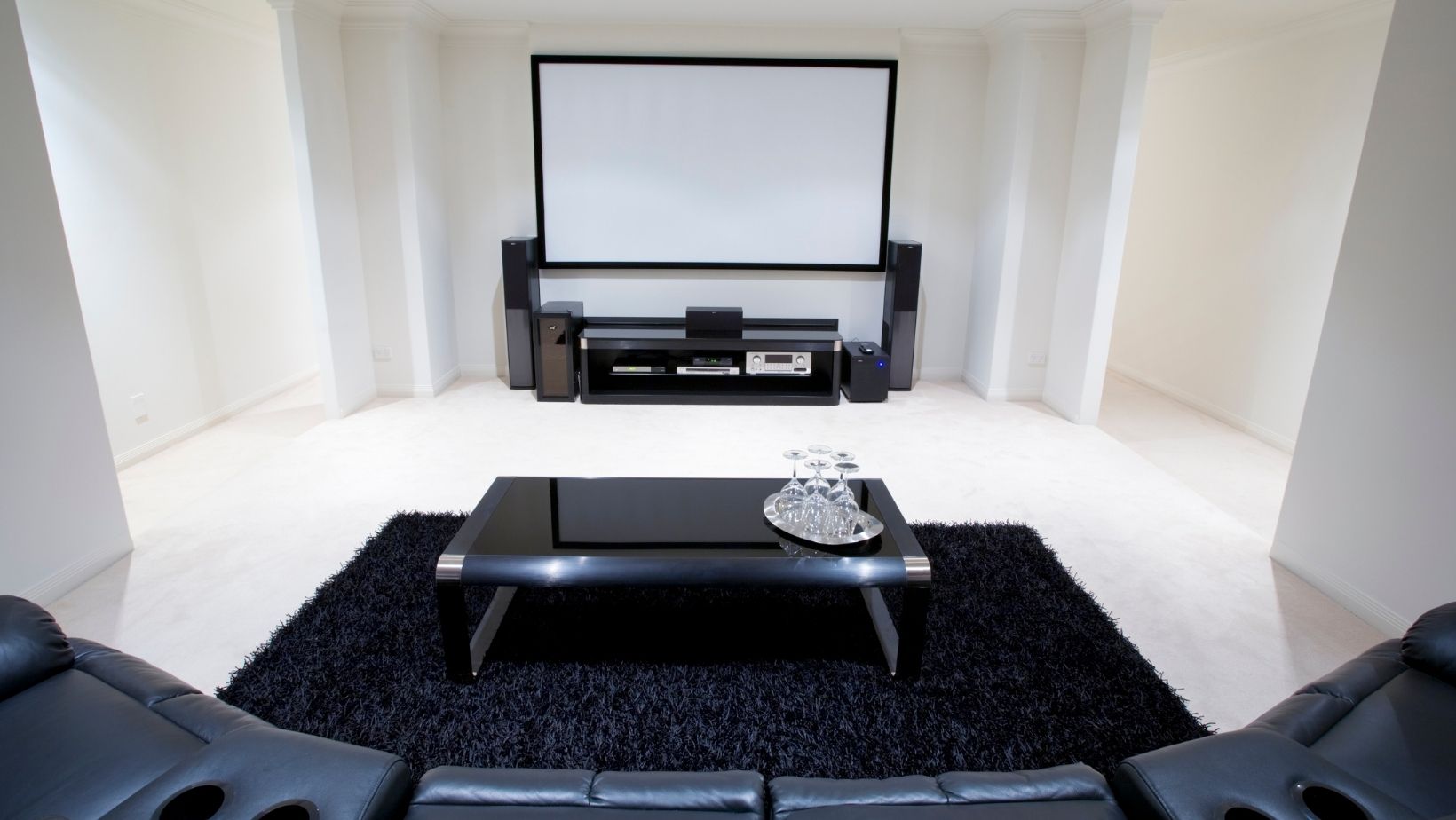
Projectors deliver size that TVs can’t match affordably. A 120-inch projected image creates genuine cinema vibes. Entry-level 1080p projectors start around $200. Decent 4K options exist under $800. The cost per inch of screen size favors projectors heavily once you go beyond 75 inches.
Sound Setup That Won’t Cost a Fortune
Great audio transforms the experience more than a bigger screen ever could. Dialogue clarity, rumbling bass, and immersive surround effects make movies feel alive. The good news? You don’t need to spend thousands to get there.
Soundbars offer the easiest entry point. A quality soundbar with a wireless subwoofer costs between $150 and $300. It beats your TV’s built-in speakers dramatically. Some models simulate surround sound convincingly enough for casual viewers. Perfect for living room setups where a full speaker system feels like overkill.
For dedicated theater rooms, consider a basic 5.1 system. You need five speakers and one subwoofer. Front left, center, front right, and two surrounds in the back. The center channel matters most. It handles dialogue. Don’t cheap out there. Budget brands like Polk Audio, Sony Core, and Dayton Audio deliver impressive performance under $400 for a complete set.
Buy used whenever possible. Audio equipment holds up remarkably well over time. Check Facebook Marketplace, Craigslist, and local estate sales. High-end speakers from ten years ago still outperform cheap new ones today. Receivers too. A used Denon or Yamaha receiver for $100 beats anything new at that price.
Why Room Acoustics Matter More Than Expensive Gear
Here’s what most beginners miss completely. The room itself affects sound quality more than the equipment inside it. Spend $2000 on speakers in a bad room and they’ll sound worse than $500 speakers in a treated space. This isn’t opinion. It’s physics.
Hard surfaces reflect sound waves. They bounce around and create echo, muddy bass, and harsh high frequencies. Your expensive speakers are fighting the room instead of filling it with clean sound. Dialogue becomes hard to understand. Music loses its punch.
Soft surfaces absorb sound waves. Carpeting helps enormously. Thick curtains on windows and walls make a noticeable difference. Upholstered furniture absorbs reflections. Even bookshelves filled with books break up sound waves effectively.
Strategic placement of absorption panels on walls eliminates flutter echo. Focus on the first reflection points. These are the spots on the side walls where sound bounces directly from speakers to your ears. Cover those areas first. DIY panels using rigid fiberglass wrapped in fabric cost a fraction of commercial options and work just as well.
Don’t forget the corners. Bass builds up there and creates boominess. Bass traps in corners tighten low frequencies dramatically. Your subwoofer suddenly sounds controlled instead of sloppy.
Seating and Comfort on a Budget
Nobody enjoys a three-hour movie on an uncomfortable chair. Seating matters more than most people budget for. But comfort doesn’t require theater-specific furniture with premium price tags.
Your existing sofa might work perfectly. Seriously. A comfortable couch positioned at the right distance from the screen handles movie nights beautifully. Add some throw pillows and blankets. Done. Save the money for better speakers.
Bean bag chairs create a casual, fun atmosphere. Kids love them. They’re surprisingly comfortable for adults. Modern bean bags use memory foam instead of beads. They conform to your body and provide real support. Prices start around $50 for quality options.
Budget recliners from stores like IKEA, Wayfair, or even Walmart offer genuine comfort without the home theater markup. Skip anything labeled “theater seating” unless you find it used. That label adds hundreds to the price for identical functionality.
Lighting and Finishing Touches
Proper lighting separates okay setups from impressive ones. Complete darkness works for movies but feels cave-like otherwise. You need options.
Bias lighting behind your screen reduces eye strain dramatically. LED strip lights in warm white create a soft glow that makes the picture appear more vivid. They cost under $20 and install in minutes. Game changer for long viewing sessions.
Blackout curtains handle windows completely. Light leakage ruins projected images, especially. Even TVs look better without glare and reflections competing for attention. Affordable options exist at every big box store.
Smart bulbs let you control brightness and color from your phone. Dim them for movies. Brighten them for cleaning. Set them to red for that authentic theater lobby feel. Philips Hue works great but costs more. Wyze and Govee offer similar functionality for less.
Add a small popcorn machine. Hang some movie posters. Include a mini fridge for drinks. These finishing touches cost little but create genuine excitement every time you settle in for a film. Your home theater doesn’t need to be expensive. It just needs to feel intentional and inviting.
More Stories
Biophilic Design: Bringing Nature Indoors for Better Health and Well-Being
Dining Room Interior Design: Transforming Your Space with Style
Masculine Interior Design: Crafting Spaces That Speak to Strength