
Your siding does more than make your house look good. It’s the first line of defense against rain, wind, heat, and everything else the weather throws at it year after year. When it starts to fail, you feel it in your energy bills, in the damp patches on interior walls, and eventually in a repair estimate that makes you wince.
Anyone searching for “siding repair NJ” quickly learns the same thing: catching damage early is the difference between a one-panel fix and a full exterior teardown. The real question isn’t whether to act. It’s whether to repair or replace — and getting that call wrong costs you either way.
The First Signs That Tell Your Siding Is in Trouble
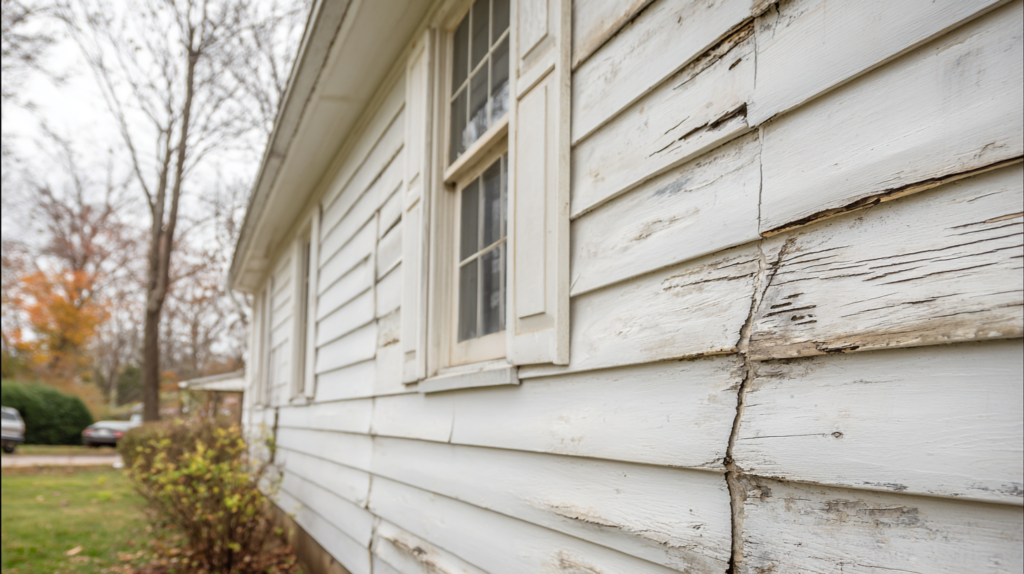
Most siding problems don’t announce themselves. They build quietly over months while you’re busy with everything else. Then one day, you notice a crack along the edge of a panel, or a section that’s bubbled out and won’t lie flat anymore. Maybe the color has faded unevenly, or a corner piece looks warped in a way it definitely didn’t before. These aren’t just cosmetic issues. Each one is a signal. Together, they’re telling you the exterior envelope of your home is compromised and needs attention.
The good news: not every sign of wear means you’re looking at a full tear-off and replacement. Context matters enormously.
Small Damage You Can Usually Repair
Isolated damage is the best-case scenario. One panel cracked by a falling branch, a small chip near the trim from a lawn mower throw, a single section showing a hairline fracture after a hail event — these are manageable. Homeowners looking for siding repair in NJ often find that isolated damage caught early is far cheaper to address than a full-scale replacement, sometimes dramatically so. A skilled contractor can swap out one or two panels, match the profile, and seal everything properly in a single visit.
The keyword is isolated. One bad panel fixed promptly stays one bad panel. Left alone, it becomes a moisture entry point that quietly takes out the three panels around it.
Warning Signs That Go Beyond a Simple Fix
Rot spreading beneath multiple panels is a different conversation entirely. So is mold discovered inside the wall cavity during an inspection — the kind you’d never see just walking around the perimeter. And if your heating and cooling bills have crept up without a clear reason, degraded siding insulation is a likely culprit. Air moves through gaps that aren’t visible from the outside.
These are systemic failures, not surface problems. Patching individual panels at that stage is the equivalent of putting a bandage on something that needs surgery. It delays the inevitable and often makes the eventual replacement more expensive.
How Age and Material Type Change the Math
The age of your siding changes the entire calculation. A twenty-five-year-old vinyl exterior showing early wear is a very different situation from a ten-year-old fiber cement installation with minor storm damage. Materials have lifespans. Knowing where yours sits in that range tells you whether repair money is well spent or essentially wasted.
Vinyl Siding Lifespan and When Repairs Stop Making Sense
Quality vinyl siding lasts between 20 and 40 years. But past the 20-year mark, the material begins to lose flexibility. Panels become brittle and crack more easily. Colors fade inconsistently, making patch matching nearly impossible without visible seams. At that age, every repair is a short-term fix on an exterior that’s approaching the end of its useful life. The math stops working in your favor.
Fiber Cement and Wood Shake — A Different Calculation
James Hardie fiber cement is built to last 30 to 50 years with proper maintenance, and it holds up well to targeted repairs well into its lifespan. Wood shake is a different story. It can last decades, but it’s far more vulnerable to moisture, insects, and freeze-thaw cycles. Without regular treatment and inspection, wood shakes tend to deteriorate across large sections simultaneously rather than failing one panel at a time. When it goes, it often goes fast.
Repair Budget vs. Replacement Investment
There’s a practical threshold most experienced contractors use: when repair costs exceed 30 to 40 percent of full replacement, replacement wins. The logic is simple. You pay for the repair today, then again in two years, then again after that. Meanwhile, a full replacement gives you a decade or more of zero maintenance headaches and a dramatically better-looking exterior.
There’s also the resale angle, and it’s worth taking seriously. New siding consistently delivers one of the strongest ROI figures among exterior home improvements, returning roughly 76 to 82 percent of project cost at sale. If you’re planning to sell within the next few years, a full replacement isn’t just a maintenance decision. It’s a financial one.
Moisture, Mold and Structural Risk
Here’s what a walk-around inspection won’t show you. Moisture that gets behind siding can silently destroy the OSB sheathing and wall framing for years while the exterior still looks mostly intact. One failed caulk joint, one shifted piece of flashing — that’s all it takes. Water finds the path and follows it, steadily, patiently, until the damage is serious.
Mold inside a wall cavity is invisible from the outside. Elevated moisture in the framing won’t register on your palm pressed against a panel. This is exactly why a surface-level visual inspection, even a thorough one, isn’t enough to base a major decision on. A professional brings a moisture meter, sometimes a thermal imaging camera, and the experience to know where problems hide. Skipping that step means you’re making a decision with incomplete information. On something as consequential as your home’s structural integrity, that’s a risk not worth taking.
A Simple Decision Framework
Before you call anyone, run through these questions honestly.
How old is your siding? Past 20 years for vinyl or past 30 for fiber cement without consistent upkeep, and the numbers likely don’t favor repair. Is the damage localized or widespread? One damaged panel is a repair conversation. Five panels failing in different spots around the house is a replacement conversation. Have your energy bills increased without a clear explanation? Are there any moisture stains or soft spots on interior walls adjacent to exterior surfaces? And finally, are you planning to sell the home within the next few years?
Four out of five point toward replacement, and the answer is probably clear. But even when the checklist is mixed, the final call still belongs to someone who can actually see what’s happening behind those panels. Not because you can’t assess the situation yourself, but because the full picture requires tools and trained eyes that a DIY walkthrough simply can’t replicate.
Getting a Professional Assessment in New Jersey and Pennsylvania
Whatever direction you’re leaning, start with an assessment rather than a decision. An honest evaluation from an experienced contractor will either confirm your instincts or show you something you missed — and either outcome saves you money.
Companies like American Quality Remodeling offer free estimates for both siding repair and full replacement across NJ and PA — including services with vinyl, James Hardie fiber cement, and wood shake siding — so you can get a clear picture of your options before committing to either route. They handle everything in-house, pull the necessary permits, and work with materials specifically suited to the regional climate. No pressure to go big when a repair genuinely makes sense, and no reason to keep patching a siding that’s already past its prime.
Getting the assessment costs you nothing. Making the wrong call without one can cost you plenty.
More Stories
How to Address Urgent Home Repairs with Limited Financial Resources
Winter-Ready: What Your Home Needs Before the First Snow Falls
Rising Home Repair Costs and What Homeowners Can Do About Them