
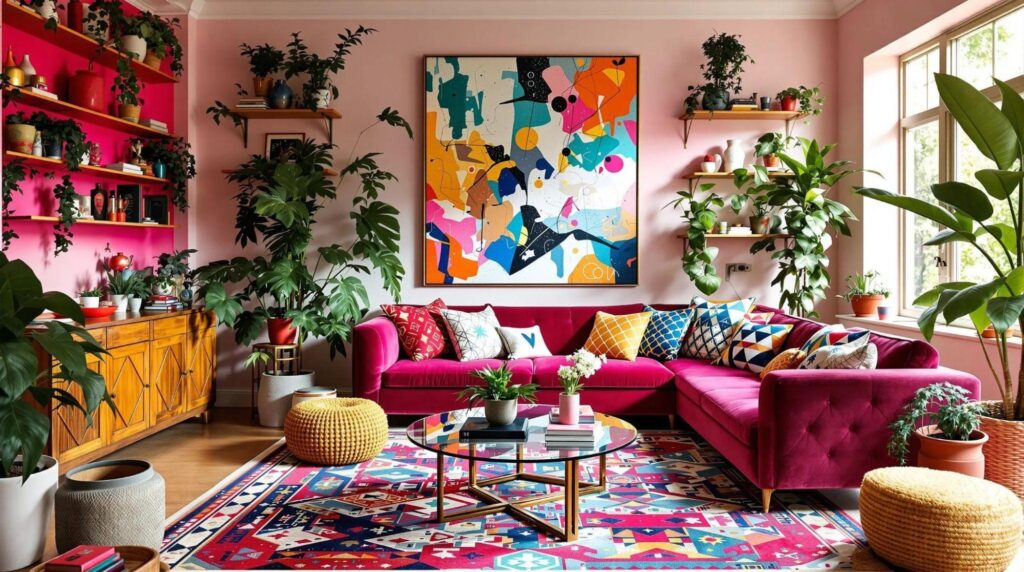
Living in a world full of minimalistic trends? We say, let’s shake things up a bit with maximalist home decor. It’s not just about filling every corner of your living space: it’s about celebrating individuality, creativity, and sometimes, sheer chaos. So buckle up, because we’re diving into a world where more is definitely more. Whether you’ve got a collection of vintage records or an array of eclectic art pieces, it’s time to let your personality shine like a glittering disco ball in a sea of beige alternatives.
What Is Maximalist Home Decor?
Maximalist home decor is a style that champions abundance over simplicity. Unlike its minimalist counterpart, which tends to favor clean lines and functional spaces, maximalism thrives on bold colors, vibrant patterns, and a mix of textures. Think of it as looking at a canvas filled with strokes of paint that come together to form a lively masterpiece.
In our homes, maximalism encourages us to embrace our quirks and whims. It invites us to layer elements that tell our unique story. Instead of hiding away the things we love, maximalism encourages us to display them proudly, creating a visual feast for anyone who walks through our door.
Key Characteristics of Maximalist Design
Maximalist design has some characteristic hallmarks that make it truly unique. Let’s explore these essential features that can help us transform our spaces into exuberant showcases of who we are.
Choosing Colors and Patterns
In our quest for a maximalist aesthetic, color choices are anything but timid. Think deep jewel tones paired with vibrant pastels. Use floral prints, geometric patterns, and abstract designs in ways that might make a minimalist’s head spin. We can combine these patterns in our upholstery, curtains, and even artwork to create harmonious chaos. The trick? Balance. Layering different colors and patterns can create a cozy ambiance rather than feeling scattered or overwhelming.
Incorporating Textures and Materials
Texture is another key player in the maximalist game. Mixing materials, from plush velvets to sleek metals and rustic woods, adds depth to our interior design. We might choose a chunky knit throw draped over a glossy leather couch or scatter crystal accents on a reclaimed wood table. Each element should feel like it could have a story to tell.
How to Layer Decor Items
Layering decor items is where the magic truly happens. We can start with a base layer, this could be a bold rug or a statement piece of furniture. Next, we can add varying heights with decor pieces, tall vases, short sculptures, and everything in between. Stacking books, mixing framed art, and incorporating plants can also elevate our design game.
Another effective technique is to stick to a theme or idea but allow ourselves the freedom to play within that framework. For instance, if our theme is botanical, we can include a variety of plant prints, botanical décor items, and an assortment of live plants for that lush, vibrant feel.
Creating a Cohesive Maximalist Aesthetic
While maximalism embraces the eclectic, achieving cohesiveness is crucial. One way we can do this is by picking a unifying factor: this could be a color palette or a recurring motif, like geometric shapes. For example, if vibrant oranges and blues are our go-tos, let’s use those colors across various elements. We could have a sunset print on the wall, orange pillows, and blue accents in our vases.
Also, we can anchor our design with statement pieces, a bold sculpture, an expressive piece of art, or a striking piece of furniture can serve as the focal point from which we build our design. This helps create a visual flow that guides the eye and keeps the space feeling intentional.
Common Mistakes to Avoid
Diving into maximalist decor can be exhilarating, but it’s easy to hit a snag. Here are a few common pitfalls we should strive to avoid:
Overcrowding: Yes, we love our trinkets, but let’s resist the urge to cram everything in. Allow for some breathing space so our decor can shine.
Ignoring Balance: While we want layers, we must also ensure that no single area feels too heavy or cluttered compared to others. Balance different weights in our decor items.
Forgetting Functionality: Eventually, our home should be livable. Over-decorating can hinder movement and usability, so we must keep comfort in mind.
More Stories
Interior Painters vs DIY: What’s Worth It and What’s Not
The Accessible Bathroom: How to Combine Safety and Luxury
Understanding Tile Labor Cost Per Square Foot