
Walk into a bathroom where the tub is perfectly placed, and you feel it right away. The room feels balanced, open, and calm. Walk into one where the layout is awkward, and even beautiful finishes cannot fix the flow. Bathtub placement is not just a detail. It shapes how the entire space works and feels.
Many homeowners focus on tile patterns or vanity colors first. Yet smart bathroom layout ideas often begin with deciding where the tub should sit. The right placement can make a tight room feel larger. It can turn an ordinary remodel into a spa-like retreat. If you are planning a renovation or building new, thinking carefully about tub position will help you design with purpose instead of guesswork.
Center Stage Soaking for a Bold Statement
Placing a bathtub in the center of the bathroom creates instant visual impact. This approach works best in larger rooms, such as a primary suite remodel with at least 12 by 14 feet of space. In that setting, a freestanding tub becomes the anchor that organizes the rest of the layout.
Brands like Badeloft design sculptural tubs that are meant to stand alone. With thoughtful freestanding bathtub placement, you can leave clear walking space on all sides and still maintain balance between the vanity, shower, and storage.
A centered tub also opens creative design options. You might add a chandelier overhead or install a floor-mounted faucet for a sleek look. In one real-life example, a homeowner placed a matte white oval tub in the middle of a bright primary bathroom, aligning it with double vanities on one wall and a glass shower on the other.
The result felt symmetrical and calming. Before choosing this setup, measure carefully. Leave at least 30 inches of clearance around the tub so movement feels natural and not cramped.
Under the Window for Everyday Escape
Setting a bathtub beneath a window is one of the most timeless bathroom layout ideas. Natural light softens the space and makes soaking feel more relaxing. In a suburban home with a backyard garden view, this placement can turn a simple bath into a daily reset.
In a 10-by-10 bathroom, a freestanding tub centered under a large picture window creates a focal point without taking over the room. Frosted glass maintains privacy while allowing daylight to fill the space.
For smaller homes, even a modest window above a built-in tub can make a difference. A homeowner renovating a second-floor bath placed a deep soaking tub under a horizontal window that stretches across the wall. The sunlight during the day reduced the need for artificial lighting and made the space feel open. Use moisture-resistant materials around the window frame. Proper sealing protects the wall from water damage and keeps maintenance simple.
Corner Placement That Makes Tight Rooms Work
In compact homes, corner placement can solve layout challenges. A corner tub uses two walls, freeing up floor area for other fixtures. This strategy works well in small bathroom design plans where space is limited.
Imagine a 5×8 bathroom remodel. By placing a rounded corner tub at one end, the homeowner gained room for a floating vanity and additional storage shelves. The room felt less boxed in because more of the open floor remained visible.
Corner tubs also soften sharp angles in square rooms. Adding built-in shelves above the tub helps organize bath items without cluttering countertops. When planned carefully, this layout improves function while maintaining style.
Alcove Setup With Fresh Details
The alcove tub remains common in many homes. Positioned between three walls, it is practical and cost-effective. Yet it does not need to look basic. In a narrow guest bathroom, an alcove tub paired with full-height tile instantly feels modern. Extending tile to the ceiling creates a taller visual line. A built-in niche keeps shampoos and soaps neatly tucked away.
This setup works well for a shower-tub combination. Plumbing remains straightforward, which can reduce renovation costs. For families who use the tub daily, this layout supports comfort and easy cleaning. Small updates such as bold grout, patterned tile, or a sleek glass panel can transform a standard alcove into a standout feature.
Along a Feature Wall for Visual Impact
Placing the tub along a feature wall allows you to create drama without using the center floor space. This idea suits medium-sized bathrooms where a full freestanding bathtub placement in the middle might feel tight. You might choose textured stone, large-format tile, or a painted accent wall behind the tub. Position the tub slightly forward from the wall to create depth.
To enhance this design, consider:
- Wall-mounted faucets for a streamlined look
- Vertical sconces framing the tub
- A large mirror to reflect light
- Minimal decor that keeps focus on the bathing area
In one renovation, a homeowner installed a deep oval tub against a charcoal tile wall. Soft lighting on each side highlighted the texture and made the room feel layered and intentional.
Raised Platform for Spa Energy
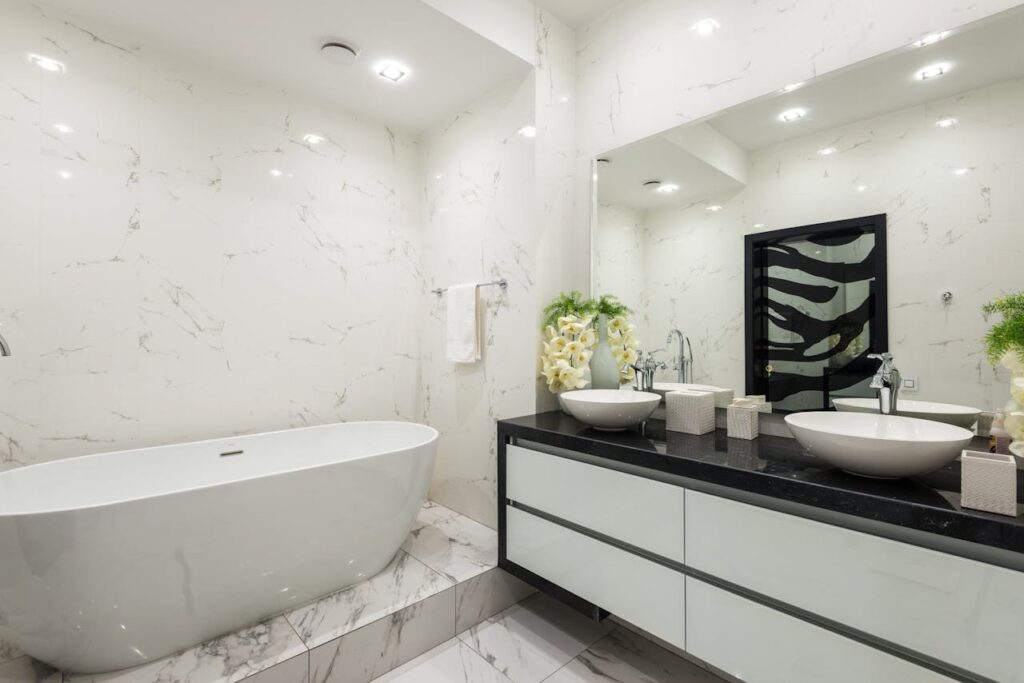
A built-in platform can elevate both the tub and the overall layout. Instead of sitting directly on the floor, the tub rests within a raised deck. This approach works well in larger bathrooms with room to build upward. In a luxury remodel, a rectangular soaking tub was set into a tiled platform with two wide steps. Hidden storage beneath the platform held towels and bath essentials. The change added dimension and made the bathing area feel separate from the rest of the room. Lighting around the base of the platform enhances the spa mood. Plants, candles, or wood accents can soften the structure and add warmth.
Smart Moves for Compact Bathrooms
When working with limited square footage, careful planning makes all the difference. A slim freestanding tub placed along one wall may visually open the space more than a bulky built-in model. In a 6×9 bathroom, aligning the tub, toilet, and vanity in a straight line creates a clear path from door to window. Sliding glass panels instead of shower curtains keep the layout streamlined. Light colors, reflective surfaces, and minimal accessories support small bathroom design goals. Even in tight rooms, thoughtful bathtub placement can maintain comfort and flow.
Plumbing Planning That Supports Great Design
Creative ideas must also align with plumbing realities. Moving water lines across a slab floor can increase costs. When possible, consider how your desired layout connects with existing drain and supply lines. Consulting a professional helps ensure water flow, ventilation, and drainage are handled properly. Smart bathroom layout ideas balance creativity with practicality so the space works beautifully every day. Bathtub placement is more than decoration. It directs movement, shapes comfort, and defines how your bathroom feels the moment you walk in. Choose the right spot, and the entire room transforms from ordinary to unforgettable.
More Stories
6 Smart Ways to Use Outdoor Planters to Elevate Your Home’s Décor and Curb Appeal
Timing It Right: The Finest Seasons for Exterior Painting in Northeast Ohio
MyIQ: Smarter Thinking for Better Home Design and DIY Projects