
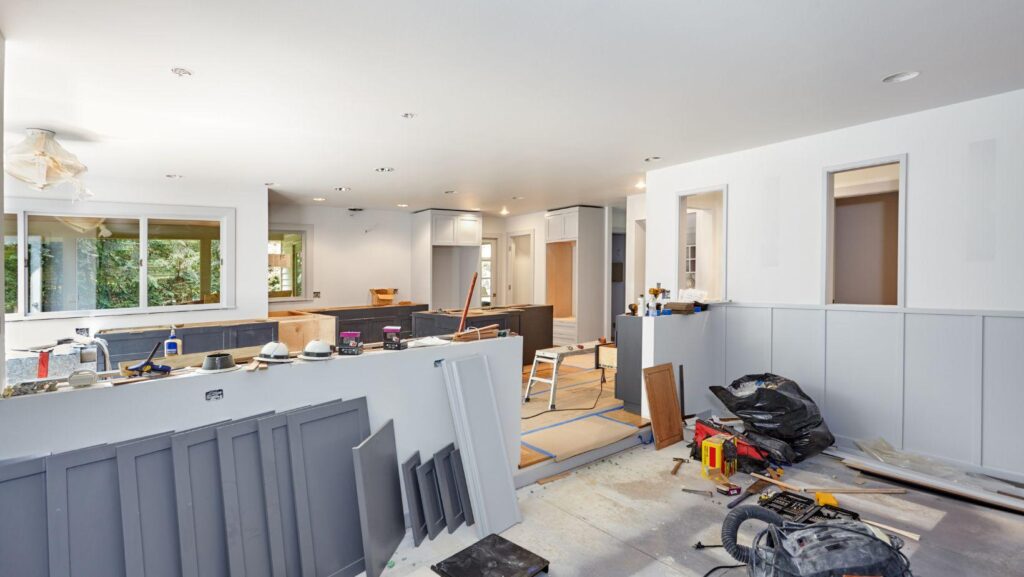
Older homes offer something new builds cannot: character, mature trees, established neighborhoods, and solid bones. They also come with realities a whole-home remodel has to plan around.
If you are taking on an older house, knowing what lies ahead is the difference between an exciting project and a stressful one. This guide walks through the surprises, the systems, and the sequencing that define an older-home remodel.
Every section answers a single question in full, so you can skip to whatever you are weighing right now.
Why remodel an older home instead of moving?
Because the things that make an older home worth owning, the location, the lot, the neighborhood, the character, are exactly the things you cannot buy in a new build. Remodeling lets you keep all of that and fix what no longer works.
Moving trades a known home in a loved neighborhood for an unknown one, plus the cost and upheaval of the move itself. For many owners, a thoughtful whole-home remodel delivers the house they want in the place they already love, which is a hard combination to beat.
What surprises hide behind the walls of an older home?
Homes built decades ago were wired, plumbed, and framed to the codes of their time. Once demolition opens things up, it is common to find issues that were invisible from the outside. The table below lists the usual suspects.
|
Common older-home surprise |
Why it matters |
Typical response |
|
Outdated or aluminum wiring |
Safety and code compliance |
Rewire affected circuits, update the panel |
|
Galvanized or corroded plumbing |
Low pressure, leaks, water quality |
Replace supply lines during the remodel |
|
Undersized electrical panel |
Cannot support modern loads |
Upgrade the service panel |
|
Subfloor or structural damage |
Soft floors, uneven surfaces |
Repair or reinforce framing before finishing |
|
Little or no insulation |
Comfort and energy cost |
Add insulation while walls are open |
A good remodeler budgets and schedules for the likelihood of surprises rather than pretending they will not happen. The walls being open is actually the ideal, and cheapest, moment to address these issues, so discovering them is not bad news, it is opportunity.
Should you remodel the whole home at once or room by room?
Remodeling the entire home at once buys you consistency: flooring that flows, one design language, and mechanical systems sized for the whole house rather than patched room by room.
It is more disruptive up front but far more coherent when finished, and often more cost-efficient because trades are mobilized once instead of repeatedly. Room-by-room makes sense when budget or life circumstances require it, but it tends to cost more over time and leaves a home feeling stitched together.
Do the systems matter as much as the finishes?
In an older home, often more. The unglamorous upgrades, electrical, HVAC, plumbing, insulation, are what make a house genuinely comfortable and safe to live in, even though they never show up in photos.
Finishes get the attention, but a beautiful home that is cold in winter, low on water pressure, and tripping breakers is not a successful remodel. Getting the systems right is what you feel every day, long after the novelty of the new kitchen wears off.
What does a whole-home remodel timeline look like?
A whole-home remodel typically runs several months, moving through demolition, systems and structural work, insulation and drywall, then finishes room by room. Older homes add time when surprises surface, which is why the schedule needs built-in flexibility.
The realistic expectation is a project measured in months, not weeks. A contractor who sequences the work well, tackling the hidden essentials before the visible finishes, keeps that timeline honest and avoids the costly mistake of finishing over unresolved problems.
How disruptive is a whole-home remodel?
Honestly, quite. A whole-home remodel usually means living elsewhere for part of it or confining yourself to a small, sealed-off zone with temporary kitchen and bath arrangements.
Planning for that disruption up front, where you will cook, where you will sleep, how you will manage dust, makes it far more bearable. The upside is that doing everything at once compresses the disruption into a single stretch instead of dragging it across years of piecemeal projects.
How do you keep an older home’s character?
By deciding early which original details are worth preserving, trim profiles, built-ins, hardwood floors, a fireplace, and designing the remodel around them rather than erasing them.
The best older-home remodels feel updated without feeling generic, blending modern function with the details that give the house its soul. A skilled remodeler helps you distinguish the character worth keeping from the dated elements worth replacing, so the home reads as itself, only better.
What updates make an older home genuinely comfortable?
Beyond the visible finishes, comfort comes from insulation, efficient windows, updated HVAC, and modern electrical capacity. These are the changes that make an old house feel as easy to live in as a new one.
They rarely photograph well, but they are what you notice on a cold morning or a hot afternoon. Prioritizing them ensures the remodel improves daily life, not just resale photos, which is the point of remodeling a home you intend to keep.
Do older homes always need electrical and plumbing upgrades?
Not always, but often. Whether your home needs them depends on when it was built and whether previous owners already updated the systems. Demolition and inspection reveal the truth.
The safe assumption is to budget for the possibility. If the systems turn out to be fine, that contingency simply goes back into your pocket or into finishes; if they do not, you are ready to address them without derailing the project.
How do you budget for an older-home remodel?
Build a larger contingency than you would for a newer home, commonly 20 percent or more, because the unknowns are greater. Older homes reward patience and punish tight budgets that leave no room for surprises.
The goal is to plan for the likely surprises rather than be blindsided by them. A remodeler who has worked on homes of your era can help you set a realistic figure, turning vague anxiety about the unknown into a concrete, funded plan.
Why does local experience matter in Englewood?
Neighborhoods have eras, and homes from the same era share the same quirks, the same wiring conventions, the same plumbing, the same framing habits. A remodeler who knows those patterns turns unknowns into known quantities.
A team experienced with home remodeling in Englewood has almost certainly seen your home’s surprises before, which means faster diagnosis, fewer stalls, and a smoother path from demolition to finished home. Local knowledge is not a luxury on an older home; it is what keeps the project on track.
Whole-home remodel or addition: which is right?
If your home has the space but the wrong layout or dated systems, a whole-home remodel is usually the answer. If you genuinely need more square footage, an addition, or a combination of the two, may be required.
Many older homes have more usable space than their choppy layouts suggest, so reworking the existing footprint often beats building new square footage. A good remodeler helps you weigh the cost and disruption of each against what your family actually needs.
How do you handle hazardous materials in an older home?
Homes built before the late 1970s can contain lead paint or asbestos in flooring, insulation, and other materials. These are manageable, but they must be identified and handled by qualified professionals rather than disturbed casually during demolition.
A remodeler experienced with older homes plans for testing where appropriate and brings in the right specialists for safe removal. Addressing this properly protects your family and keeps the project compliant, turning a potential hazard into a routine, planned step.
Should you update the windows during a whole-home remodel?
Often, yes. Original single-pane windows in an older home leak heat, let in drafts, and drive up energy bills. A whole-home remodel is the natural moment to upgrade them for comfort and efficiency.
New windows also refresh the look inside and out. Because the disruption is already happening, folding window replacement into the larger project is more efficient than tackling it separately later, and the daily comfort gain is immediate.
How do you improve energy efficiency in an older home?
The high-impact moves are adding insulation while walls are open, sealing air leaks, upgrading windows, and installing modern, efficient HVAC. Together these transform how comfortable and affordable an older home is to live in.
These upgrades rarely show in photos but are felt every day and on every utility bill. A whole-home remodel is the ideal, and cheapest, time to make them, since the walls are already open and the systems are already being touched.
What permits does a whole-home remodel require?
Structural changes, electrical and plumbing work, window and door alterations, and additions all typically require permits. A whole-home remodel usually involves several, coordinated through the local building department.
A remodeler who handles these regularly manages the submissions and inspections as a routine part of the job. Permits protect safety and resale value, so a team that navigates them smoothly keeps the project both compliant and on schedule.
How do you protect original features during construction?
The features worth keeping, hardwood floors, trim, built-ins, a fireplace, are identified early and physically protected during demolition and construction with coverings and careful sequencing.
A good remodeler treats these details as assets rather than obstacles, working around them to preserve the character that makes an older home special. Clear communication up front about what stays ensures nothing irreplaceable is lost in the dust of the project.
How do you sequence a whole-home remodel in an older house?
Start with the hidden essentials, structure, roof, electrical, plumbing, insulation, then move to the high-impact living spaces, and finish with secondary rooms. Sequencing protects your finishes from problems beneath them.
In an older home this order matters even more, because the systems are more likely to need work. Getting the bones and mechanicals right first means the beautiful finishes you add later are never at risk from a failure you could have addressed while the walls were open.
What is the biggest mistake in older-home remodels?
Underestimating the hidden condition of the home, and budgeting as if it were a newer house. Older homes hide surprises, and a tight budget with no contingency turns those discoveries into stalls and stress.
The fix is to plan for the likely surprises rather than hope they will not appear. A generous contingency and a remodeler experienced with homes of your era transform the unknowns from crises into routine, funded steps in the plan.
How do you choose finishes that suit an older home?
Blend modern function with finishes that respect the home’s character, complementing original details rather than fighting them. The goal is a home that feels updated and cohesive, not one where new and old clash.
A skilled remodeler helps you strike that balance, choosing finishes that honor the home’s era while delivering the comfort and style you want. Done well, the result feels timeless, as though the home always should have looked this way.
Is remodeling an older home worth it?
For most owners, yes. You keep the location, lot, and character that a new build cannot offer, while fixing the layout, systems, and finishes that no longer serve you. The result is a home that feels new in the place you already love.
The key is going in with clear eyes: budget for surprises, invest in the systems, and hire a team that knows older homes. Approached that way, an older-home remodel delivers character and comfort together, which is a combination that is hard to buy any other way.
The Bottom Line
Older homes reward patience. Plan for the surprises behind the walls, invest in the systems you cannot see, decide which character is worth keeping, and you get the charm of an established home with the comfort of a new one.
Approach it whole-home rather than piecemeal where you can, budget a generous contingency, and lean on a team that knows your home’s era. Do that, and the house you already love becomes the house you always wanted.
More Stories
How to Save Money on Marina Fees and Boat Storage
How to Prevent Heating Interruptions in a Propane-Powered Home
How Progressive Jackpot Pools Are Split Between Sites