
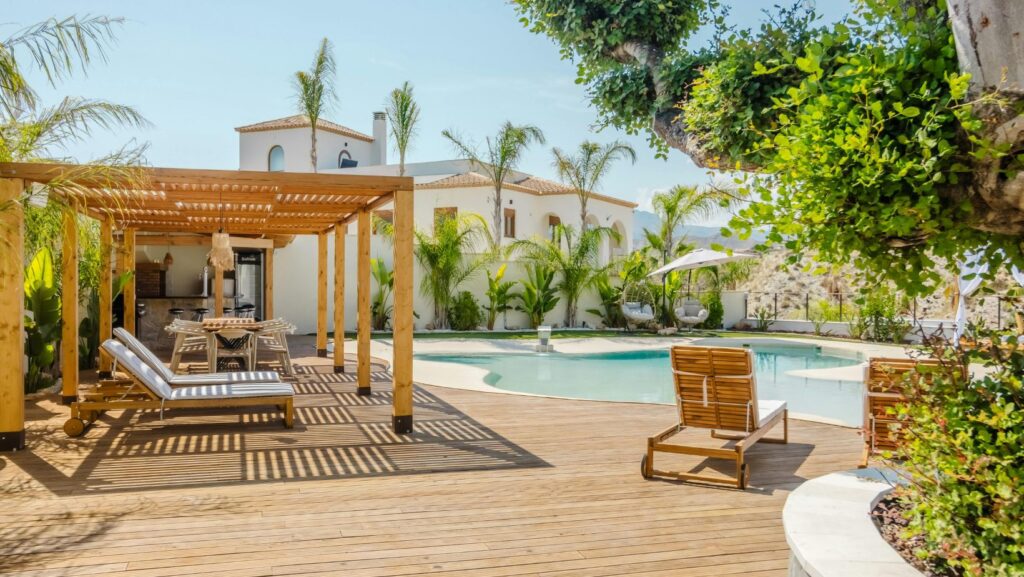
A lot of backyards look great right up until the first stretch of extreme heat. Then the reality sets in. Decking gets too hot to walk on, the sunny lounge area never gets used, plants start looking tired, and the whole space feels harder to enjoy than it should.
That is usually the difference between a backyard that was designed to photograph well and one that was designed to actually function. In hotter climates, the best outdoor spaces do more than look polished. They are planned around comfort, durability, and the way people really use the space day after day.
Not All Surfaces Are Built for Summer
One of the first things people notice in extreme heat is what is happening underfoot.
Some materials absorb so much heat that they change how the whole backyard feels. A beautiful patio or pool surround can become frustrating fast if it is uncomfortable by late morning. That is why surface selection matters more than many homeowners expect.
Materials that tend to perform better in extreme heat include:
- travertine decking
- lighter-colored pavers
- textured concrete with reflective finishes
- light-toned pool coping
- durable finishes that resist cracking and fading in strong sun
These choices help with comfort, but they also help the space maintain a cleaner, more finished look over time.
A Backyard Without Shade Usually Feels Incomplete
There is a big difference between having an outdoor space and having one person actually want to sit in.
Shade is often what makes that difference. Without it, even a beautiful backyard can feel exposed and underused during the hottest part of the day. A dining area, lounge zone, or poolside setup may look finished on paper, but if there is nowhere to step out of direct sun, the space never works as well as it should.
That is why features like these matter so much:
- pergolas over seating or dining areas
- covered patios that extend usable living space
- slatted shade structures that soften harsh light
- cabanas or poolside covers near lounging zones
The right shade feature does more than cool things down. It gives the yard structure and makes the design feel more intentional.
Water Features Earn Their Place Fast
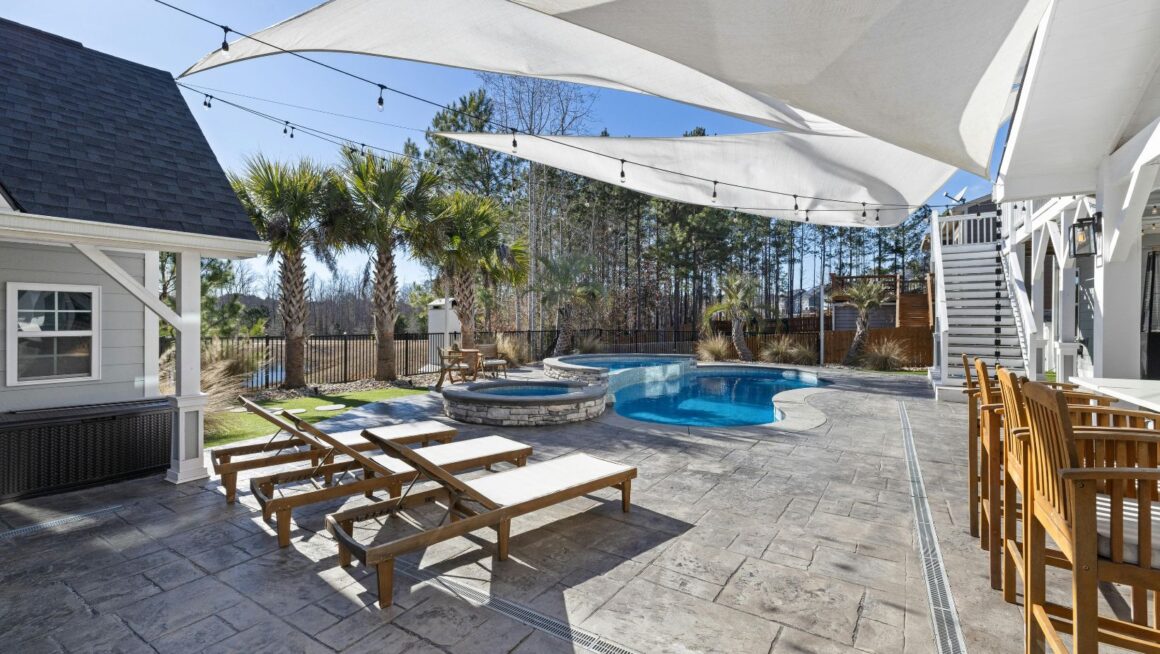
Some features become much more valuable when the temperature keeps climbing, and water is one of them.
A pool is the obvious example, but smaller details matter too. Movement changes the feel of a space. It adds energy, sound, and a sense of relief that works especially well in hot, dry conditions. Even subtle water elements can make a backyard feel more dynamic and more livable.
A few examples that work especially well are:
- baja shelves for shallow lounging
- deck jets that add motion without overwhelming the design
- scuppers or sheer descents for sound and flow
- spillover spas that bring another cooling focal point into the yard
In hotter regions, these features are often part of a more cohesive pool and landscape design, where the layout, materials, and water elements are all planned to work together.
Some Landscaping Struggles in Heat. Some Gets Better With It
Planting can either help a hot backyard feel more balanced or make it much harder to maintain.
When the landscape is filled with plants that need too much water or too much upkeep, the yard starts feeling inconsistent. Some areas thrive, others burn out, and the whole design can lose that polished look faster than expected.
Landscaping that tends to hold up better in extreme heat often includes:
- drought-tolerant plants
- native or climate-adapted greenery
- low-water ornamental grasses
- structured planting beds with rock or mulch
- shade trees positioned to support key gathering areas
The goal is not to make the yard feel sparse. It is to create softness and dimension in a way that still makes sense for the climate.
The Layout Can Make or Break the Space
This is the part that is easy to overlook.
A backyard can have beautiful materials, quality features, and attractive planting, but still feel awkward if the layout is off. A seating area placed too far from the pool, long stretches of exposed hardscape, or disconnected zones can make the entire space feel hotter and less inviting.
The strongest backyards usually feel easier to move through because the design is doing more work behind the scenes. That might mean:
- placing shaded seating close to the pool
- creating smoother transitions between dining and lounging
- avoiding oversized open areas that trap heat
- balancing sunny and shaded zones throughout the yard
- arranging features so the space feels connected instead of pieced together
This is often where thoughtful planning stands out most, especially in climates where comfort has to be built into the design from the beginning.
The Best Outdoor Spaces Feel Good to Use, Not Just Good to Look At
Extreme heat has a way of exposing every weak design choice. You see it in the surfaces that run too hot, the plantings that start to struggle, and the layouts that leave people without a comfortable place to spend time.
The backyards that hold up best are usually not the ones with the most features. They are the ones where the right features were chosen and arranged with purpose.
When materials stay cooler, shade is built into the layout, water features add relief, and the landscaping supports the climate, the space starts to feel easier, smarter, and more complete. That is what gives a backyard lasting value in extreme heat, and what makes it somewhere people genuinely want to be.
More Stories
Inside TheHomeTrotters.com: What the Site Is, Who It’s For, And Why It Matters In 2026
TheHomeEtrotters.com Reviewed: What It Offers, Who It’s For, And How To Use It In 2026
TheHometrotterss.com Reviewed: What Travelers Need To Know In 2026